A313 Review: Everything You Need to Know About the Viral French Retinol
This blog post may contain affiliate links. I may earn a small commission for any purchases made through these links. Click here for the disclosure statement.
If you’ve spent even five minutes in the Reddit beauty forums, on the skincare side of TikTok, or browsing French pharmacy hauls on Instagram, you’ve definitely seen A313.
This iconic French retinol has gone viral for its ability to smooth fine lines, clear congestion, brighten dull skin, and give that signature French girl glow, all at a pretty accessible price.
Beloved by celebrities like Alexa Chung and Sienna Miller, it’s earned a serious cult following, and I’m here to give my own review.
Is the A313 cream actually worth the hype? Is A313 retinol? How does it compare to prescription-strength formulas? And what is A313 even used for? Here’s everything you need to know before adding the A313 pommade to your own skincare routine.
What is A313?
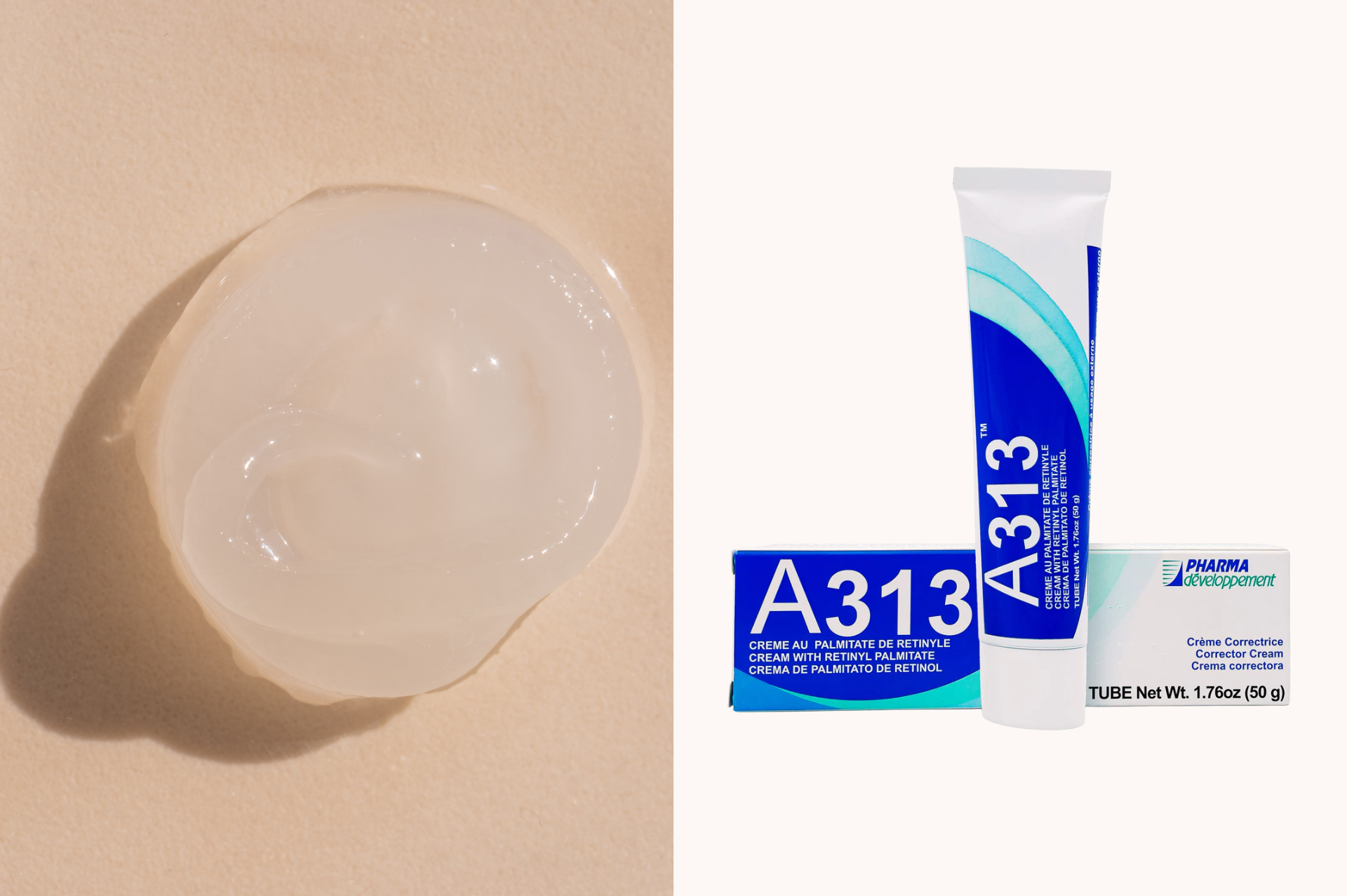
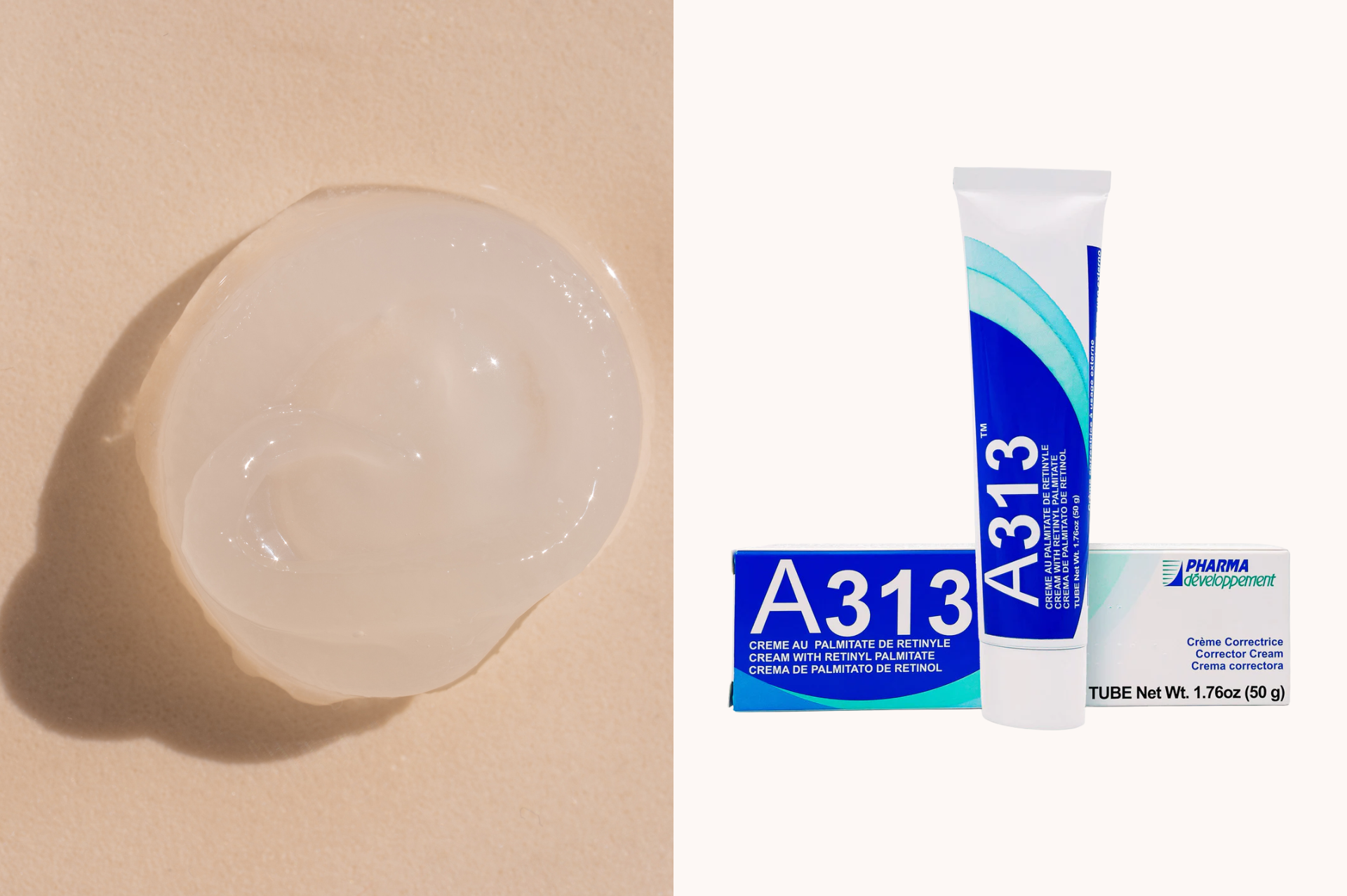
Often described as one of France’s best-kept beauty secrets, A313 is a vitamin A pommade that you’ll find stocked in nearly every French pharmacy. It comes in a simple white-and-blue tube that looks more like a medicinal ointment than internet-famous skincare, but don’t let the packaging fool you.
Although it’s frequently called a “retinol,” A313 isn’t actually retinol. It’s a retinoid, specifically retinyl palmitate, a gentler form of vitamin A that slowly converts into retinoic acid once it’s absorbed into the skin. This slow conversion makes it far less intense than prescription tretinoin, yet still powerful enough to smooth, brighten, and refine texture with fewer side effects.
Made by Pharma Développement, A313 doesn’t require a prescription in the U.S. or France.
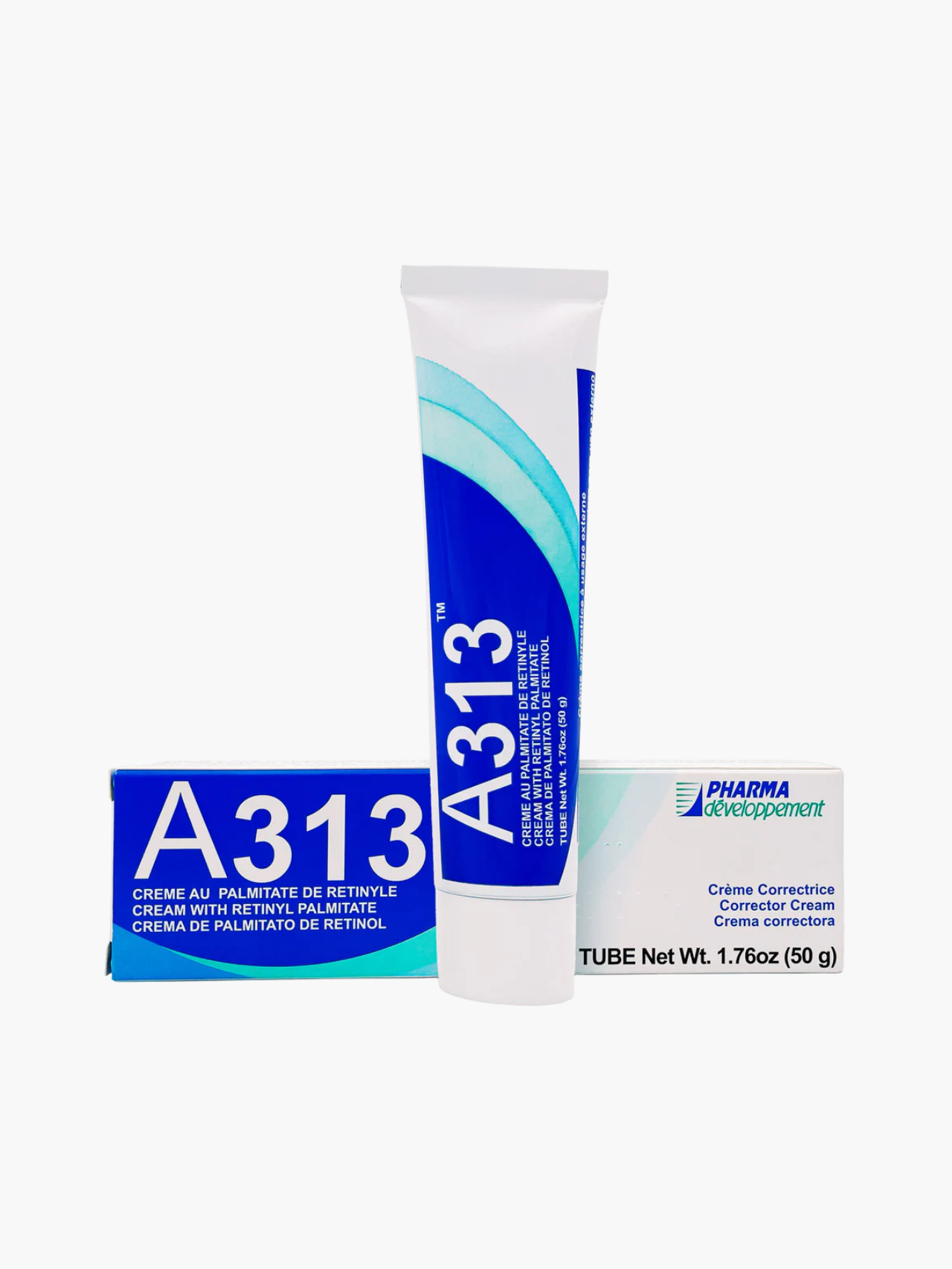
A313 Ingredients
The hero of A313 is its vitamin A complex. Instead of using retinol, A313 combines three retinyl esters (retinyl palmitate, retinyl acetate, and retinyl propionate), a gentler group of vitamin A derivatives. In total, the tube contains 200,000 IU of vitamin A, which works out to roughly 0.06% retinol in strength.
Because retinyl palmitate sits on the milder end of the retinoid family, its collagen-boosting and skin-smoothing effects are more gradual than what you’d get from retinol or retinal. But that’s also why so many people with sensitive skin swear by A313: it won’t result in the peeling, dryness, or irritation stronger retinoids can cause.
Just keep in mind that, like all vitamin A products, it can increase sun sensitivity, so it should only be used at night and always paired with SPF during the day. Check out my guide to the best French sunscreens if you need some recommendations.
To round things out, the formula includes tocopherol (vitamin E) for antioxidant support and arachis hypogaea (peanut) oil to soften and nourish. Everything is suspended in a waterless base of PEG-8, PEG-75, and Polysorbate 80, giving A313 its signature slippery ointment texture and allowing the vitamin A to absorb gradually rather than all at once.
A313 vs. Tretinoin
Tretinoin is a prescription-strength retinoid that converts directly into retinoic acid, which makes it fast, potent, and effective for deep wrinkles, stubborn acne, and more intensive skin concerns. Because of its strength, it often brings peeling, purging, and dryness, especially during the adjustment phase or if your skin runs sensitive.
A313, by contrast, uses retinyl palmitate, an over-the-counter vitamin A derivative that requires multiple conversions before becoming active. This slower process makes it gentler, but also significantly less potent. It can still be a fit if your skin is extremely sensitive or if you want to introduce retinoids at the slowest pace possible, but it won’t deliver the same level of results as standard retinols or any prescription retinoid.
A313 vs. Avibon
To understand why A313 has such a devoted following, it helps to look back at Avibon, a French pharmacy vitamin A ointment that had its own cult moment. What is Avibon? It was a pharmaceutical-grade vitamin A product sold over-the-counter in France.
Its popularity in America exploded in the early 2010s after Gwyneth Paltrow mentioned it on Goop, sending everyone into a frenzy to grab a tube. But just as it became mainstream, the product vanished. Why was Avibon discontinued? In 2013, several batches were recalled for “product stability” issues, and the brand never brought it back.
Since then, A313 has become the unofficial replacement. It uses a similar style of vitamin A and offers that same ointment-like feel. Though, like Avibon, it’s still on the gentler, lower-potency end of the retinoid spectrum.
Read More: A Complete Guide to the Best French Skincare Brands
How to Use A313
How you use A313 really depends on your retinoid history. If you’ve been using retinol or even tretinoin for a while, you may not need much of a “slow and steady” buildup. But if you’re a beginner or have sensitive skin, start cautiously. Apply only at night, beginning with one to two evenings per week, and slowly work your way up to two or three times weekly as your skin adjusts.
A pea-sized amount is enough for the entire face. If you want to treat your neck and décolleté as well, add a bit more and spread it thinly.
The formula is thick and ointment-like, so warming it between your fingertips helps make it more spreadable. It should be applied to clean, completely dry skin (never damp, since that can increase irritation).
Because A313 has an occlusive, balm-like texture, you technically don’t need a serum or moisturizer on top, but most people still like to follow with a simple cream to buffer the retinoid and keep dryness away.
As your skin becomes more comfortable with it, you can gradually increase frequency to every other night and, only if tolerated, nightly use. And of course, don’t skip SPF the next morning since vitamin A products always increase sun sensitivity.
Does A313 Really Work?
A313 is not a retinol in the traditional sense, like prescription-strength tretinoin or some of the higher-potency French pharmacy retinols. You won’t see dramatic overnight transformations, but over time, it can help stimulate collagen, smooth fine lines, support acne healing, and improve overall skin texture and brightness.
Where A313 really stands out is its tolerability. For sensitive skin, retinol beginners, or anyone looking to introduce vitamin A slowly, it’s a way to experiment with a retinoid without the flaking, redness, or dryness that stronger formulas often bring.
The A313 before and after examples speak for themselves: many users report smoother-feeling skin, a softer complexion, and a subtle, healthy glow after consistent use.
That said, if your goal is aggressive anti-aging or serious acne control, A313 probably won’t get you there on its own. Its widespread availability in French pharmacies and modest price point have given it cult status online, but its efficacy is moderate compared to stronger French retinols and vitamin A products.
Read More: 20 Best French Pharmacy Products That Are Worth the Hype
A313 FAQs
What does A313 do?
Vitamin A for skin comes with a long list of benefits, and A313 puts them to work in a gentle, approachable way. This French retinol cream helps support skin healing, minimize breakouts, fade dark spots, and stimulate collagen production, all while gradually reducing the appearance of fine lines and wrinkles.
Does A313 cause tingling?
Some users notice a slight tingling or warming sensation when first applying A313. This is normal, especially if your skin isn’t used to retinoids. The sensation usually fades as your skin builds tolerance. If it becomes uncomfortable or persistent, reduce frequency or layer a moisturizer underneath to buffer it.
Does A313 cause purging?
“Purging” happens when your skin accelerates cell turnover, which can temporarily bring clogged pores or minor breakouts to the surface. With A313, purging is generally mild compared to stronger retinoids, but if it occurs, it should subside after a few weeks of consistent use. While it can be annoying, purging isn’t necessarily a bad thing. It means your skin is clearing out trapped sebum and dead cells while paving the way for a smoother complexion.
Can I use A313 if I have rosacea?
A313 is gentler than prescription retinoids, but rosacea-prone skin can still be sensitive to vitamin A derivatives. If you have rosacea, start very slowly (once a week), and watch for redness or irritation. It may not be suitable for everyone, so consider patch-testing first or consulting a dermatologist.
How long does A313 take to work?
A313 works gradually. Most people notice subtle improvements in skin texture and minor fine lines within 4–6 weeks, but visible anti-aging or acne results can take 2–3 months of consistent use. Patience and regular application are key.
Your skin may go through an adjustment period called “retinization.” During this phase, usually the first month or two, you might experience dryness, itching, or mild irritation.
After the first couple of months, side effects generally settle down, and you’ll start seeing a smoother texture, more even tone, and brighter, clearer skin. Wrinkles and deeper lines take longer to improve, often 6 months to a year of steady use. A313 isn’t a quick-fix cream, but with consistent nighttime application, it can work wonders for your skin.
Can you mix A313 with other products?
Yes, but with caution. Avoid layering A313 with strong chemical exfoliants (AHAs, BHAs) or benzoyl peroxide at the same time, as this can increase irritation. You can safely use hydrating serums, moisturizers, or gentle cleansers alongside it. Vitamin C should be used in the morning, with A313 reserved for nighttime.
Is A313 cruelty-free?
According to Pharma Développement, their A313 vitamin A pommade is not tested on animals. They state that they do not conduct animal testing and do not use any ingredients that have been tested on animals.
Is A313 pregnancy safe?
No, A313 and other vitamin A creams including retinoids and retinyl palmitate should not be used by anyone who is pregnant or breast-feeding. Always check with your doctor.
How much does A313 cost in France?
The price of A313 in France is €10 to €18 (around $11-$20 USD, depending on exchange rates) in French pharmacies for a 50g tube, making it significantly cheaper than in the US where it's often $30+.
If you plan on picking up A313 in Paris, you can use my French pharmacy discount at Monge Pharmacy to save an extra 10% or more at checkout.
Where to Buy A313
Despite its cult status, you don’t have to hop on a plane to grab A313. Authorized retailers like frenchpharmacy.com sell the cream online, and you can even order through Amazon to take advantage of free shipping if you’re a Prime member.
If you’re visiting Paris, you can find A313 in most French pharmacies. Just ask for “A trois cent treize” at the counter. My favorite pharmacy in Paris is Monge Pharmacy. They always carry A313, and if you mention my French pharmacy discount, you can snag 10% or more off at checkout.
Final Thoughts
The reviews don’t lie: there’s a lot of hype around A313, and it does offer some noticeable benefits for the skin. While I haven’t personally tried it, since I usually stick to stronger retinols for my acne-prone skin, it’s clear why this product has such a loyal following.
If you’re looking for a gentle introduction to vitamin A or have ultra-sensitive skin, A313 is worth checking out. Most dermatologists I follow who have reviewed the product echo this sentiment: it’s not a miracle product, but well-tolerated.
I also recently discovered that A313 also makes a lifting body cream and an eye serum, so if you’re already intrigued by the brand, there are other products to explore.
Have you tried A313? What is your favorite French pharmacy retinol? Let me know in the comments below.