How the French Celebrate Easter
This blog post may contain affiliate links. I may earn a small commission for any purchases made through these links. Click here for the disclosure statement.
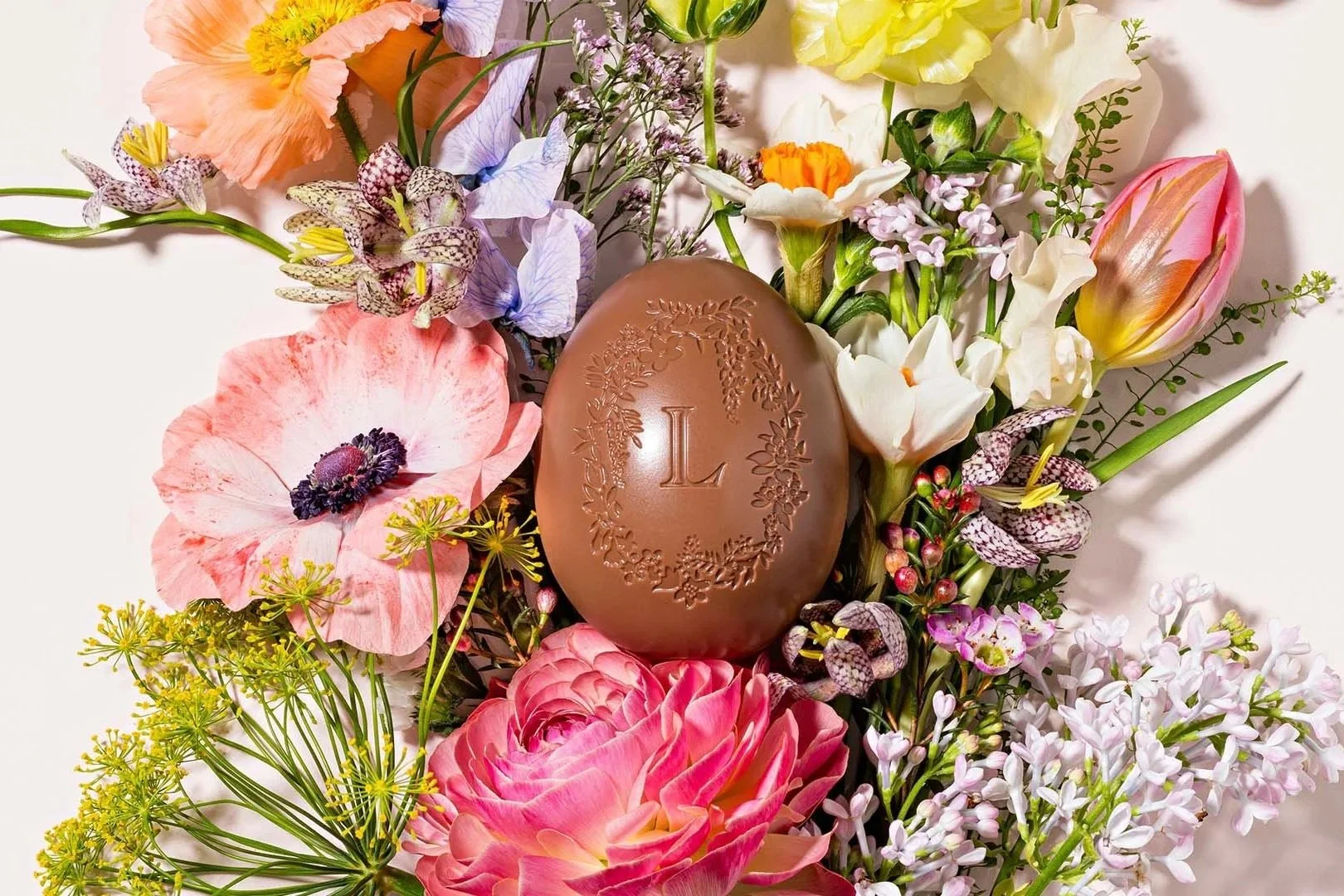
Photo credit: Ladurée
Easter, known as Pâques in France, is one of the country’s most important holidays, second only to Christmas. The celebration runs deep in French culture, shaped by centuries of Christian tradition.
It not only commemorates the resurrection of Jesus Christ and the end of Lent, but also serves as a time for family, whether they observe the religious side of the holiday or not.
How the French celebrate Easter can vary by region, but certain customs appear across the country: the ringing of the church bells, Easter egg hunts, and chocolate eggs. The French also gather for a large Easter meal with roast lamb and other seasonal dishes.
This is only a glimpse of Easter in France. Below, I share everything you need to know about French Easter traditions and how the country marks this spring holiday.
What is “Pâques”?
The French word Pâques comes from the Latin Pascha, which in turn derives from Hebrew Pesach, meaning “Passover.” The original term referred to the Jewish festival commemorating the Exodus from Egypt. According to the Gospel, Jesus rose during this celebration, linking the Jewish Passover to the Christian observance of Easter.
In French, there’s a subtle distinction: la Pâque juive refers to the Jewish Passover, while la fête chrétienne de Pâques refers to Easter, marking Christ’s Last Supper, crucifixion, and resurrection.
When Is Easter in France?
Like most of Europe, France follows the Christian calendar. Easter Sunday falls on the first Sunday after the full moon that follows the spring equinox. Each year brings a new date, between late March and late April.
Easter extends well beyond a single Sunday too. The days leading up to it carry just as much meaning.
Palm Sunday (Dimanche des Rameaux)
Good Friday (Vendredi Saint)
Holy Saturday (Samedi Saint)
Easter Sunday (Pâques)
Easter Monday (Lundi de Pâques)
Both Easter Sunday and Easter Monday count as public holidays in France. Most shops and government offices close or run limited hours, though local bakeries often stay open.
Easter Bells (Les cloches de Pâques)
In France, Easter is not centered on a rabbit. Instead, French children grow up with the story of the Easter bells (les cloches de Pâques).
According to tradition, church bells fall silent from Maundy Thursday (le Jeudi Saint) until Easter Sunday, commemorating the Passion of Christ and his resurrection.
The legend says that during this time, the bells “fly” to Rome to be blessed by the Pope. On Easter morning, they return, ringing and scattering chocolate and treats in gardens and homes. Children listen for the bells and then rush outside for their egg hunt.
So is there an Easter bunny in France? No, not traditionally. The rabbit is actually a more Germanic tradition.
Ancient Saxons and Germans celebrated spring goddesses (Astra or Ost Ara) whose symbols included rabbits and hares. This evolved into the story of a bunny delivering baskets of goodies.
In border regions like Alsace, where French and German cultures blend, the Easter Bunny has been adopted alongside the bells. That’s why chocolate rabbits often appear in French shops, even as chocolate bells remain the more iconic symbol of Pâques.
Easter Eggs (L’œuf de Pâques)
Eggs have long symbolized life and renewal, making them a natural representation of Easter, which celebrates resurrection and new beginnings. Across many ancient civilizations, including the Egyptians and Greeks, eggs were offered as gifts to mark the arrival of spring. In France, this tradition dates back to the 13th century.
During Lent (le Carême), the Catholic Church forbade the consumption of eggs, but hens kept laying. By the time Easter arrived, there was a surplus of eggs that needed to be used. This is similar to why the French traditionally cook crêpes at Mardi Gras, just before Lent begins.
In medieval France, people exchanged decorated eggs as gifts, and these offerings gave rise to a variety of legends and customs.
By the 18th century, French chocolatiers began emptying eggs and filling them with chocolate. Eventually, chocolate-shaped eggs were created specifically to be hidden in gardens for children to find.
And what about dyeing Easter eggs in France? Unlike in the U.S., it isn’t a widespread tradition, especially not with the colorful kits that many Americans grew up using. Historically, French families decorated real boiled eggs by hand using natural dyes made from things like onion skins, radishes, or ivy. Today, however, chocolate eggs are much more predominant than colored eggs.
Easter Egg Hunt (La chasse aux oeufs)
In France, the Easter egg hunt is one of the most beloved traditions of Pâques. On Sunday morning, the egg hunt (la chasse aux œufs) begins. Someone usually calls out, “Les cloches sont passées !” and children run outside to collect hidden chocolates.
Historically, eggs were real, boiled, and decorated by hand. Of course, today, chocolate eggs and figures have largely replaced real eggs.
Easter egg hunts typically take place in home gardens, but many towns and communities also organize public egg hunts.
Easter Chocolate (Le chocolat à Pâques)
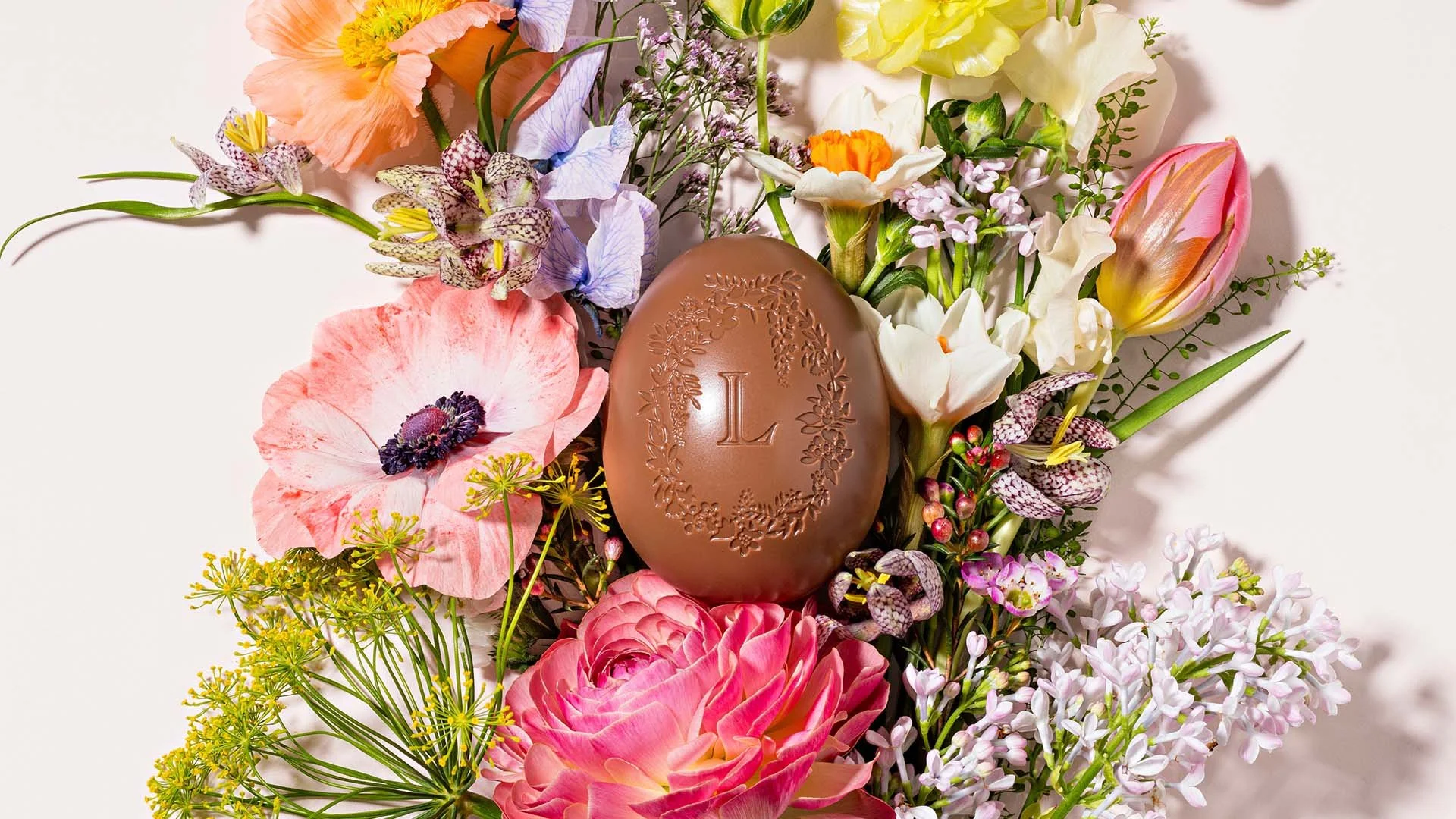
Chocolate is central to Easter in France, much like advent calendars are for Christmas. Decorated eggs and chocolate figures are common gifts to give to children and adults.
In French pâtisseries-chocolateries, chocolate eggs are crafted with great attention to detail. Most look more like works of art than anything edible!
If you’re visiting France in the spring, be sure to peek into shop windows to see some of the most elaborate chocolate creations on display. Even French supermarkets like Monoprix carry seasonal selections, including the ever-popular Lindt chocolate bunnies.
One thing that surprised me after moving to France is that Easter chocolate isn’t limited to eggs, chicks, and bunnies. You’ll also find small chocolate fish and seashells, known as fritures de Pâques.
Traditional Easter Meal
Like many French holidays, Easter revolves around a family meal.
Lamb (l’agneau) is the most traditional dish, typically a leg of lamb roasted with Provençal herbs, garlic, cumin, and olive oil. It is often served with roasted potatoes, green beans, deviled eggs, and asparagus.
Nowadays, French families still enjoy lamb at Easter, though a wider variety of cuts and preparations are common. Naturally, the meal is paired with a good bottle of French wine.
There are a few traditional Easter desserts in France too. People usually indulge in chocolate treats, but it’s also not uncommon to enjoy brioche de Pâques, a soft, sweet braided bread.
In Alsace, a special pastry called the Lamala, lammele or Osterlammele (a little Easter lamb) is traditionally baked in a glazed terracotta mold. This genoise cake, shaped like a lamb, is served for breakfast on Easter morning.
Seasonal fruits also appear at the table, with the first strawberries of the year commonly served alongside desserts.
One of my favorite parts of Pâques is enjoying all the traditional French Easter food with my friend’s family in Alsace.
Alsatian Easter Traditions
Alsace has its own unique Easter traditions that reflect its French and German culture.
After moving from Bretagne to Strasbourg, I immediately noticed a difference in how Alsatians celebrate Easter. Having also lived in Germany, I could really see the German influence too.
As I previously mentioned, the Easter Bunny is much more popular here than in other parts of France. Some families even focus on the bunny more than the bells.
People decorate their homes and shops with colorful decorations: painted eggs, spring flowers, figurines, ribbons, crosses, bunnies, and nests.
You’ll also find the traditional Lamala cake (a small lamb-shaped cake) on the table on Easter morning. If you’re visiting Alsace, pottery from Soufflenheim makes one of the best Strasbourg souvenirs. Whether or not you choose a lamb mold is up to you!
Many villages host public egg hunts, but also Easter markets with local crafts. Good Friday and Easter Monday are also public holidays in the region.
While many visitors flock to Alsace for its famous Christmas markets, Easter is such an underrated time to visit the region!
Discover more about celebrations and holidays in France:
Happy Easter! Joyeuse Pâques !
Are you celebrating Easter in France? What do you think of these French Easter traditions? Let me know in the comments below.