How to Not Look Like a Tourist in Europe
This blog post may contain affiliate links. I may earn a small commission for any purchases made through these links. Click here for the disclosure statement.

Let’s get one thing straight: there’s nothing wrong with being a tourist. You are traveling, after all.
But if you’ve ever landed in Paris, Rome, or Barcelona and immediately felt clocked as American, you’re not alone.
Europeans seem to have a sixth sense for spotting visitors, much like Americans can instantly identify a Parisian by their stylish eyewear, slim-fitting jeans and affinity for scarves (even when it isn’t cold out).
Some people say it’s perfectly fine to look like a tourist, but I personally prefer to blend in with the locals. Honestly, there’s a quiet little win in walking through a European city and having a local stop you for directions—or even speaking to you in their native language!
If you want to know how to not look like a tourist in Europe, it helps to understand how locals dress, move, and carry themselves.
You don’t have to lose your identity (I’m always happy to say I’m American when meeting new people). It simply means avoiding the obvious signals that can make you stand out to thieves and pickpockets, while also respecting local ways of life.
In this guide, I’m covering everything from European fashion and accessories to subtle cultural cues, plus exactly what not to wear in Europe as a tourist. And I’m breaking it all down as someone who’s been living in Europe (France, Germany and Austria) for the past seven years.
In this Article
What Not to Wear in Europe
What to Wear in Europe
How to Avoid Looking Like a Tourist
What Not to Wear in Europe
What you wear can seriously shape your experience abroad. I’ve found that dressing well often leads to better service and just friendlier interactions in general. It can even help you avoid being singled out as an obvious vacationer by pickpockets or scammers.
Let’s start with the biggest giveaways. If you’re wondering what to leave out of your suitcase, this list alone will dramatically change how you’re perceived in Europe.
1. Athletic Wear
It’s not that athletic wear is inherently bad, but it’s wearing it head-to-toe that can attract attention. Leggings, athletic shorts, baggy hoodies, and sweatpants instantly signal “out-of-towner”, especially when worn all together.
In most European cities, activewear is reserved for actual workouts. Wearing it all day is one of the quickest ways to break the unspoken rules of dressing like a local.
You can sometimes get away with incorporating one sporty piece if it’s styled thoughtfully. But full-on athleisure almost always makes you stick out.
If you really can’t live without your yoga pants or slouchy sweatshirt, think about how you can style them. Dress up those Lulu leggings with a sweater and boots, or pair your favorite track jacket with a nice pair of pants and loafers. These small changes are often just as comfortable, but trust me, look far more intentional.
2. Ultra-Athletic Shoes
One item that instantly signals “tourist” is blatant athletic footwear. Bulky running shoes, trail sneakers, and anything that looks like it belongs on a treadmill are best left at home.
While these styles are everywhere in the U.S., they tend to stand out on European streets, especially when you pair them with full athleisure fits (like the ones discussed above).
Comfort is incredibly important, of course. You’ll walk miles each day over cobblestones and city pavement. But you’ll rarely see fashionable Europeans wearing true performance running shoes.
Right now, it’s the slim, low-top silhouettes that are everywhere, even in fashion-forward capitals like Paris and Milan. Styles like the Puma Speedcat, Vans, and Adidas Tokyo are predicted to be especially popular this year. Anything from Nike and New Balance is also worth considering for stylish walking shoes.
I would never suggest sacrificing comfort for style. If you truly need a supportive trainer to get through full days of sightseeing, wear it! Happy feet matter more than how you look.
3. Baseball Caps
Baseball caps aren’t unheard of in Europe. I see plenty of Yankees hats around France, especially in Paris. Many of the fashionable European influencers that I follow also wear them. I’m even starting to see many French fashion brands make baseball caps with their logos on them!
That said, wearing a hat from your local sports team will often identify you as an American tourist. If you need sun protection, I would go for an unbranded cap or a straw hat in the summer.
The same goes for fan gear like logo-heavy T-shirts or team jackets. It’s true that NFL merch has started popping up more as American football grows in popularity here. But even I sometimes pause and wonder whether I’m seeing a new European fan or a traveler passing through.
4. Flip Flops
Save cheap flip-flops for the beach. Wearing them in cities like Paris, Milan, or Vienna feels overly casual, and they rarely provide enough support for the 20,000 steps you’ll likely rack up each day.
Having said that, comfortable sandals are perfectly fine, just make sure they look intentional and offer proper structure for your feet.
There’s also the practical side: European city streets aren’t exactly pristine. Between cobblestones, dust, and pavement grime, your feet will get surprisingly dirty. It’s just not worth it.
5. Shorts
While Europeans don’t wear shorts as frequently as Americans, you’ll still see them all over the continent, especially in Southern Europe, on vacation or while doing outdoor activities. But for everyday city life, museum visits, or strolling through historic centers, shorts are far less common.
European style tends to lean slightly more conservative, though summer heat does change the rules. When dressing for a heatwave, locals are much more likely to don their shorts.
While packing for Europe, I would prioritize breezy pants and skirts. At the same time, don’t feel like shorts are completely off-limits. Just be mindful of the style, and skip the athletic shorts and khaki cargoes altogether.
6. U.S. Logos
If your goal is to blend in, it’s best to avoid wearing American flags or U.S. logos. Any clothing or accessories plastered with U.S. cities or teams will also draw attention.
Last year, when my family visited me in Strasbourg, my dad accidentally packed a jacket with an American flag on the back and quickly realized he felt uncomfortable wearing it around the city.
It’s not about hiding where you’re from or being ashamed to say you’re American! It’s more so about avoiding anything that turns you into a walking target for scams and pickpocketing. And given today’s global climate, keeping things discreet also feels more respectful and appropriate.
7. Expensive Jewelry
While it can be tempting to wear your bling bling abroad, flashing expensive jewelry in European cities is rarely necessary and sometimes risky. If you don’t want to be marked as a potential target for pickpockets, travel with costume jewelry or really anything you don’t mind losing.
If you want to bejewel yourself in something special, I would suggest wearing one piece at a time and leave anything swanky at home or in your hotel safe.
8. Bulky Backpacks
Backpacks aren’t forbidden, but oversized hiking packs absolutely fall under what not to wear in Europe. Not only do they look out of place in most European cities, but wearing them on your back can also make you an easy target for thieves.
Instead, choose a smaller backpack that you can keep in front of you, especially on public transportation and in other crowded areas. I’m personally much more of a fan of a crossbody bag or a zip-up tote.
Shop Day Bags for Europe
9. Revealing Clothes
European style is often more on the modest side. While you’ll certainly see crop tops and mini skirts in some cities (especially during summer), excessively revealing outfits often feel out of place in everyday settings.
The goal isn’t to dress conservatively per se. It’s more about not being too risqué with your fashion choices. I would recommend leaving behind any low-cut tops, ultra-short hemlines, and see-through fabrics.
One more practical note: in many countries (especially Spain, Italy, and parts of Eastern Europe) you’ll need to cover up when entering churches or religious sites. Typically, that means knees and shoulders can’t be showing. I always recommend carrying a large scarf in your bag to drape over your shoulders or arms when needed.
10. Stiletto Heels
Here’s the thing, you can wear stiletto heels in Europe, but I generally don’t recommend them for sightseeing. Between long days on your feet and uneven cobblestone streets, stilettos quickly become impractical.
Yes, many European women wear heels, but they’re usually not walking thousands of steps while hopping between museums, cafés, and landmarks. For travelers, stilettos are best saved for evenings out or special occasions when you know you won’t be covering much ground.
Personally, I always pack a pair of heels, but I normally opt for block heels instead. They’re far more comfortable and less likely to snag in cobblestones.
What to Wear in Europe
So we’ve covered what to avoid, but what does that actually leave you with?
When building your packing list for what to wear in Europe, think in terms of versatile essentials rather than an entirely new wardrobe. There’s no need to overhaul your closet before a trip. At the end of the day, very few people are paying close attention to what you’re wearing, so don’t overthink it!
Nevertheless, many of us want to take plenty of vacation photos and look our best. That’s where a travel capsule wardrobe comes in. It helps you look put together and avoid hauling your heavy luggage from city to city.
Below are a few foundational pieces to consider adding to your own Europe travel wardrobe!
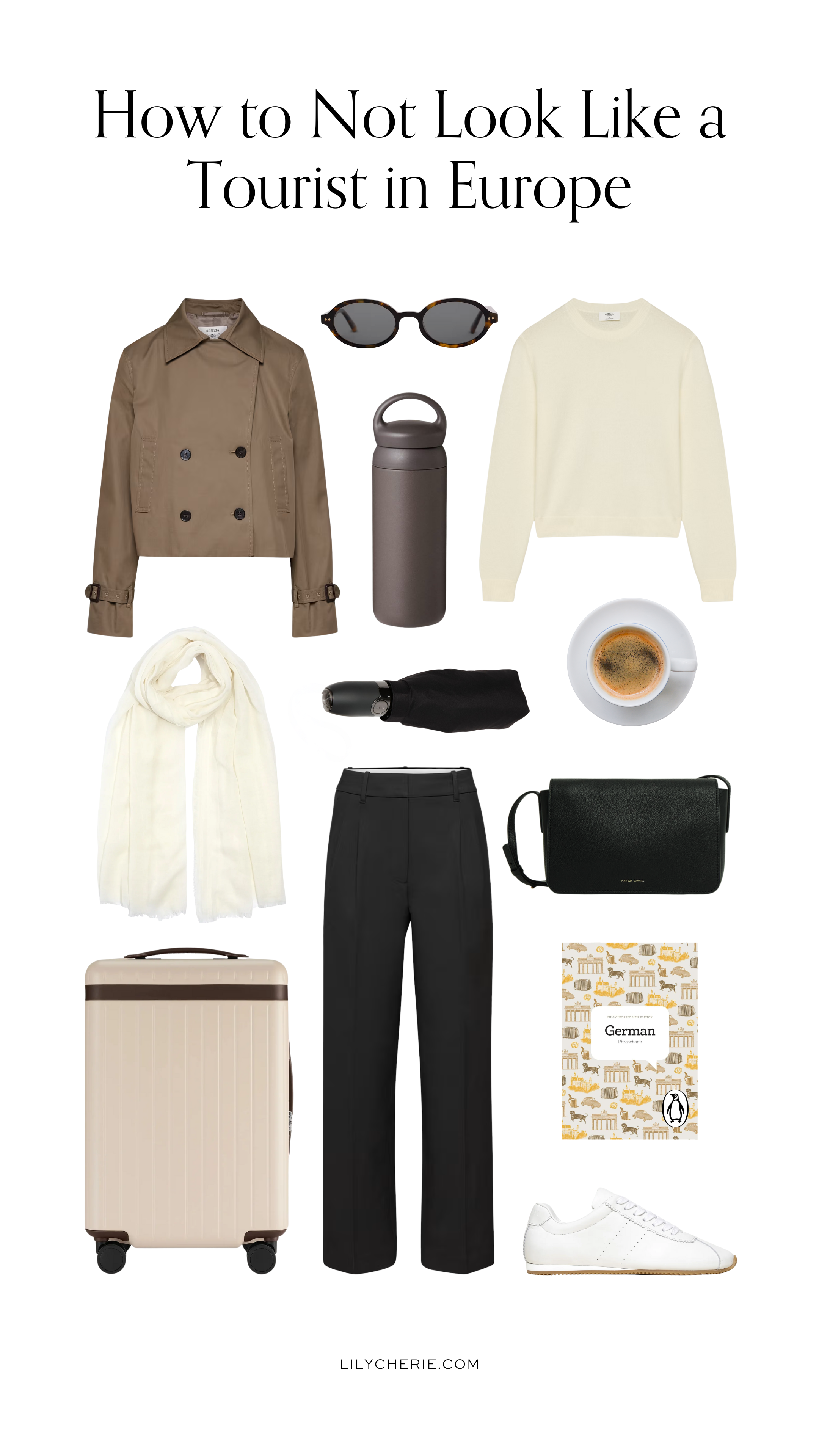
Trench coat | Sunglasses | Sweater | Travel water bottle | Scarf | Compact umbrella | Pants | Crossbody bag | Carry-on | Phrasebook | Sneakers
Well-Fitting Clothes
You can wear all the right pieces and still look out of place if they don’t fit properly. I’ve noticed that many European men and women commonly choose clothes that skim the body rather than hang loosely or cling too tightly. Even simple outfits feel elevated when everything fits well.
This doesn’t mean you need bespoke tailoring for your trip, but taking the time to hem trousers, adjust sleeve lengths, or choose silhouettes that flatter your frame makes a noticeable difference.
Neutral Colors
If there’s one shortcut to looking chic in Europe, it’s adopting a neutral color palette. Black, white, beige, camel, gray, navy, and brown are all options to play with. Another perk of wearing neutrals is that it makes it easier to build outfits from fewer pieces.
Nonetheless, you don’t have to dress head-to-toe in beige. In many of my packing guides, I show you how to incorporate color into your looks. Grounding your outfits in neutrals, however, is a good place to start if you want to look effortlessly cohesive.
Packable Layers
If there’s one thing you can count on while traveling in Europe, it’s unpredictable temperatures. Even in the summer, cities like Athens and Madrid can be sweltering during the day, only to cool off quickly once the sun sets.
Of course, you’ll need something heavier if you’re heading somewhere truly cold, but from spring to fall, I never travel to Europe without one or two packable layers in my suitcase.
What you bring will depend on where and when you’re going, but you really can’t go wrong with a trench coat, leather jacket, blazer, denim jacket, or cardigan. These styles dress up just about any outfit too.
Shop Jackets for Europe
Dresses
When female friends and family ask me what to pack for Euro summer, I almost always suggest dresses. They’re incredibly effortless and can be styled for almost any occasion. Wear them with sneakers during the day, then dress them up with heels at night.
The best summer dresses for your Europe trip will depend on where and when you go, but I often recommend a classic shirt dress, linen minis and more modest midi styles that keep you covered. Pick your preference, add your layers, and you’ll be set to explore.
Tailored Pants
When it comes to bottoms, tailored pants are the way to go. Pair them with a simple tee, sweater or blouse and you’re already halfway to looking the part.
Jeans are also a great option as long as you avoid overly distressed styles, rips, or heavy embellishments. I would stick with the clean silhouettes in darker or neutral washes. And if you’re someone who lives in leggings, skinny or straight-leg jeans can be a just as comfy substitute.
Trendy Sneakers
A stylish pair of sneakers are a travel essential. All over Europe (especially here in France), I see plenty of trendier tennis shoes from brands like Adidas, Puma, and New Balance. I’ve already shared some of the season’s must-have styles above, but this is one area where you can really have fun!
There are so many unique color combos and textures to choose from. Or stick with classic white sneakers that go with literally everything. Either way, your feet will thank you.
For a deeper dive, check out my guide to the best walking shoes, where I share my favorite tried-and-tested options for Paris and beyond.
Shop Sneakers for Europe
Scarves
One of my European travel essentials is a scarf. I wear mine on the plane, to religious sites, and as an elegant layer on chillier days. I’m telling you, it instantly adds a chic European touch to any outfit you style it with. In the summer, a lightweight voile or shawl works perfectly, while in the winter, a cozy wool option keeps you warm and stylish.
Shop Scarves for Europe
How to Avoid Looking Like a Tourist
Beyond style, the way you carry yourself can help you mix in with the locals. Your behavior and interactions matter, so here are some ways to avoid standing out as a tourist while traveling in Europe:
Walk with Purpose
Even if you have absolutely no idea where you’re going, walk confidently. If you need to look at your map, please, don’t stop abruptly in busy streets. Step to the side first and let others pass.
Before heading out for the day, I like to take a minute to familiarize myself with my route. I don’t memorize every turn, but just having a general sense of direction gives me a lot of confidence.
When you’re out and about, check your phone occasionally instead of staying glued to it. Not only will you look less like a tourist, but you’ll also notice so much more around you!
Stay Aware of Your Surroundings
Pickpockets and scammers tend to target people who look distracted. Someone staring at their phone, juggling shopping bags, or zoning out on public transport is far easier to approach than someone who seems alert.
Keep your bag zipped. Be mindful in crowded areas. And if you’re enjoying a glass of wine (or two), do so responsibly. Being overly tipsy in unfamiliar places can make you vulnerable.
No need to walk around feeling paranoid though. Just stay present and trust your instincts, no matter where you are.
Follow Local Customs
One of the fastest ways to garner attention is by ignoring how locals do things.
Before your trip, spend a little time learning about cultural norms. How do people dress day-to-day? How are meals typically enjoyed? What’s considered polite (or impolite)?
Then, once you arrive, observe and match the energy around you. I can tell you from my own adventures that it makes your experience so much richer and it shows respect for locals.
If you expect things to work exactly like they do back home, you not only limit your mindset, but peg yourself as a tourist.
Lower Your Volume
Americans tend to get a lot of flak for speaking loudly. I’ve seen more than a few TikToks of Europeans poking fun at travelers whose conversations are just a bit too loud for the setting.
I’m not a fan of these videos calling people out (and it’s definitely not just Americans, by the way), but they do bring up something worth paying attention to: your volume!
It’s a good idea to be mindful of how loud you speak, especially in restaurants, shops, and on trains.
I love an enthusiastic, loud catch-up with my American friends back in the States. But when I’m abroad, I make a conscious effort to use my “indoor voice.”
As I mentioned before, do as the locals do. I’ve also visited cities in Europe (especially Spain and Italy) where it felt more acceptable to talk loudly.
Skip the Giant Water Bottle
That oversized reusable water bottle you carry everywhere at home? It’s much less common in Europe. I know this firsthand because I bring mine to workout classes each week, and I definitely get a few curious looks when I’m walking through the streets.
Instead, order water when you sit down at a café or restaurant, or bring a smaller bottle that fits easily into your bag. Many cities have fountains or places to refill, and grabbing drinks throughout the day is part of the experience anyway.
Savor Your Meals
Avoid eating while walking whenever possible. In most of Europe, it’s much more common to sit down and savor your meal. Even with something quick, like a gyro or a slice of pizza from a street vendor, it’s often better to pause and enjoy it rather than stroll around while eating.
Cultural norms around dining can vary a lot depending on the city or country, so it’s worth familiarizing yourself before you go. If you’ve seen that episode of Emily in Paris where she orders her steak medium and then clashes with the waiter, you get the idea.
Learn the Language
You don’t need to be fluent, but learning even a few basic phrases in the local language goes a long way. Learn how to say hello, please, thank you, and excuse me. Practice ordering coffee. Locals truly appreciate the effort, even if your pronunciation isn’t perfect.
Visiting Europe soon? Check out some of my favorite guides I’ve written to help you dress like a local:
What’s one thing you always do to avoid looking like a tourist when you travel abroad? Let me know in the comments below.