15 Europe Travel Essentials to Pack in 2026
This blog post may contain affiliate links. I may earn a small commission for any purchases made through these links. Click here for the disclosure statement.

Packing for a trip to Europe in 2026? Whether you’re strolling through cobblestone streets of Paris, uncovering hidden gems in Croatia, or city hopping by train, packing smart is everything.
It’s easy to feel overwhelmed, especially when you’re headed to a place that you’ve never been before. Lugging around unnecessary items is the last thing you want!
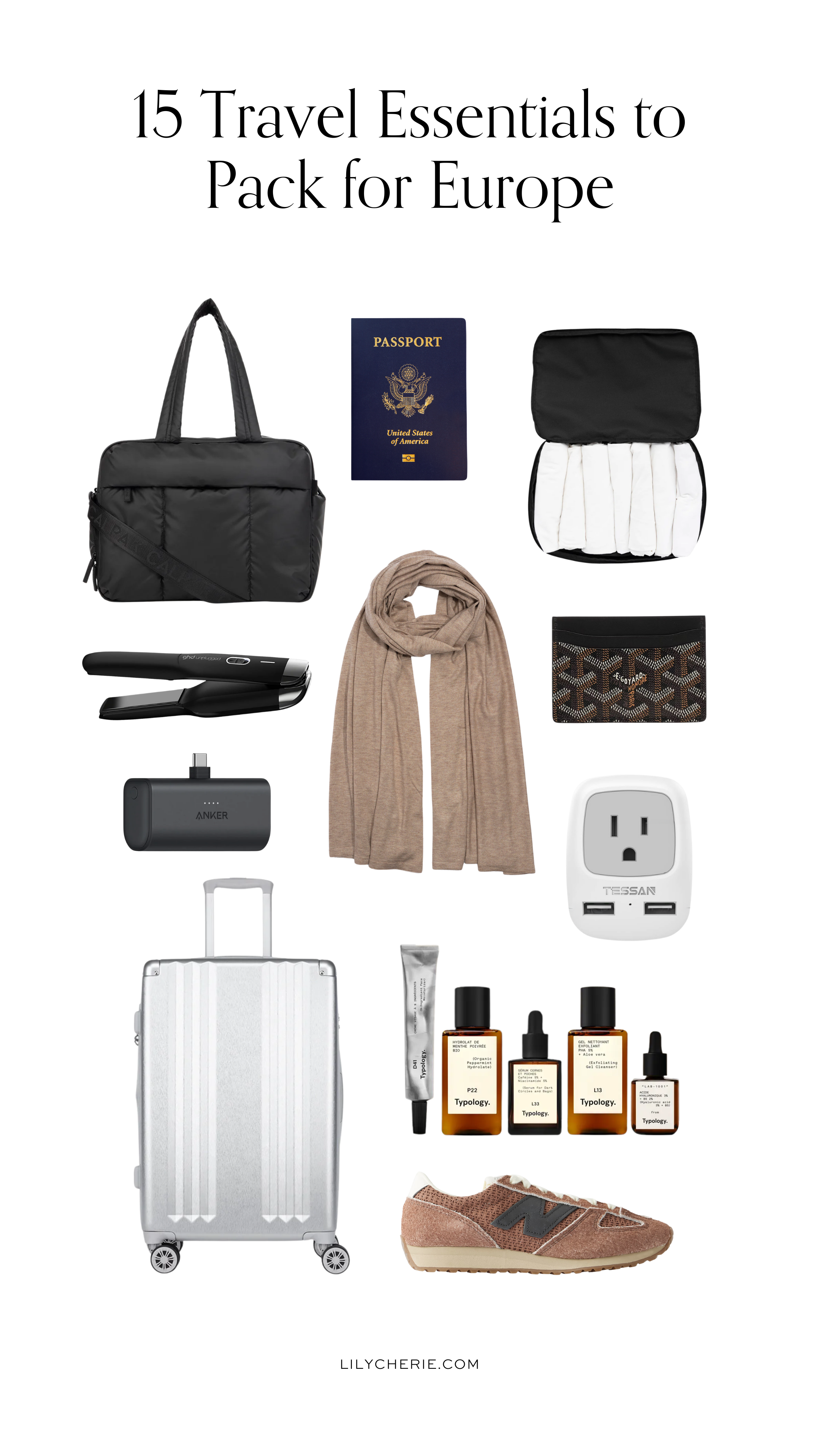
To make things simple, I’ve put together the ultimate list of 15 Europe travel essentials you shouldn’t leave home without. Continue reading for what to pack for your next international adventure.
Shop europe travel essentials
1. Durable Carry-On
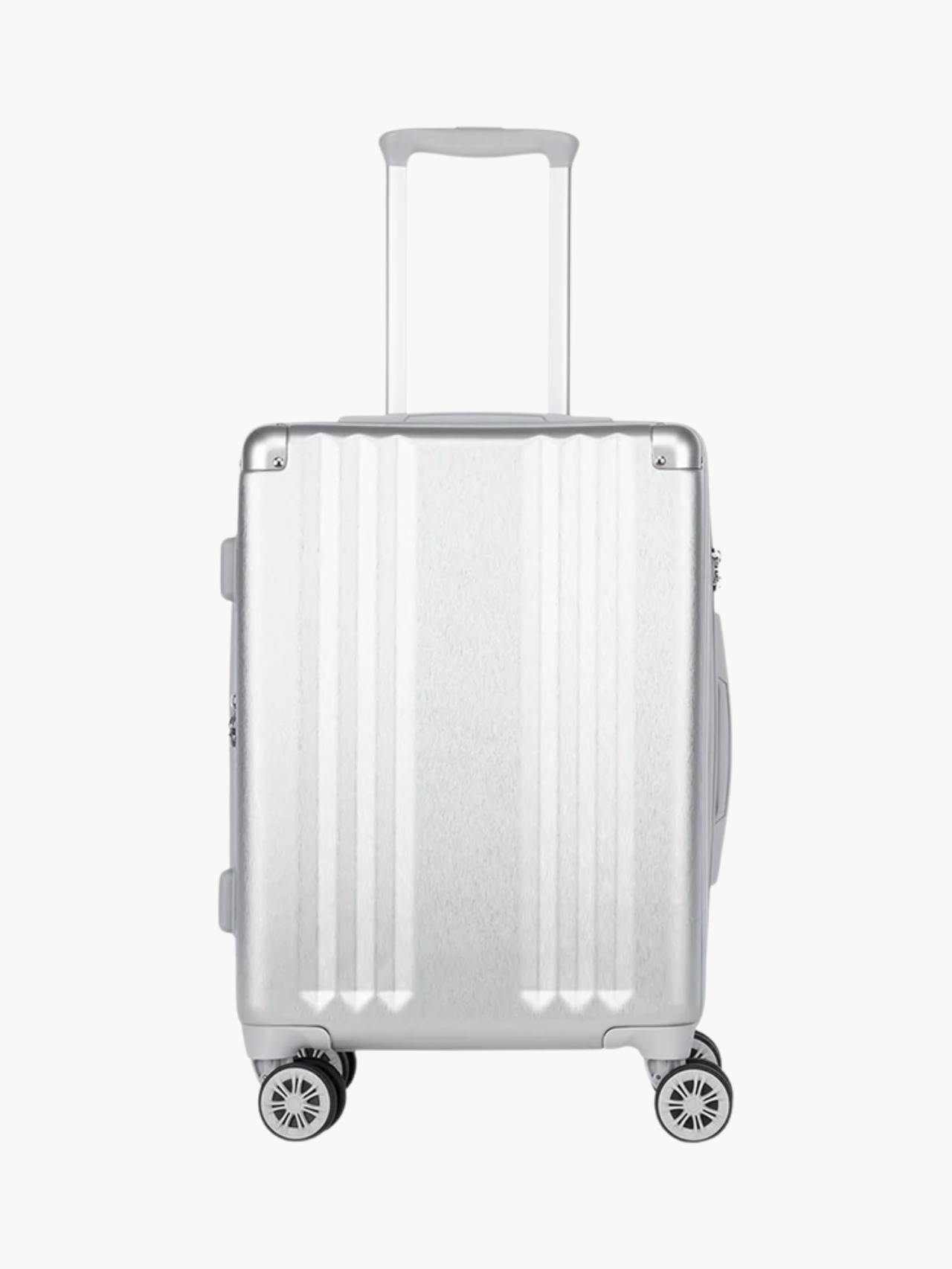
One of the most important investments you’ll make as a traveler is a sturdy, spinner-style carry-on. Whether you’re packing carry-on only or checking a larger bag, your suitcase will be with you on flights, trains, buses, taxis, and tramways (often all in the same day).
European cities aren’t always suitcase-friendly either. Cobblestone streets, narrow sidewalks, and lots of stairs mean you need luggage that’s actually durable. I can tell you from experience that cheaper suitcases simply don’t hold up.
You don’t necessarily need to splurge on a Rimowa (especially if you’re not a frequent traveler) but there are better quality options than others. Some features that I look for in a carry-on are:
Smooth, 360° spinner wheels (these make it so much easier to roll)
Strong zippers and a reinforced shell
A lightweight frame that’s easy to lift (we don’t want to add unnecessary weight to our bag)
Smart interior compartments for organization (a panel divider with zippers is a must for me)
Dimensions that meet airline size limits (some cheaper bags have wonky sizes that don’t always comply)
I’ve personally been very happy with my SwissGear luggage that I’ve had since 2020. It’s held up remarkably well after dozens of trips across Europe. Other reliable mid-range brands I would suggest are Travelpro, Away, and Tumi.
Now, if you do want to splurge, Briggs & Riley and Rimowa are two top-tier options. Both offer lifetime warranties, which can be worth it given how much luggage gets knocked around during travel.
Finally, don’t forget to add on a colorful luggage tag. It makes your bag easy to spot in a sea of suitcases and holds up far better than flimsy airline tags.
Read More: How to Pack Light When Traveling with Just a Carry-On
2. Tote Bag
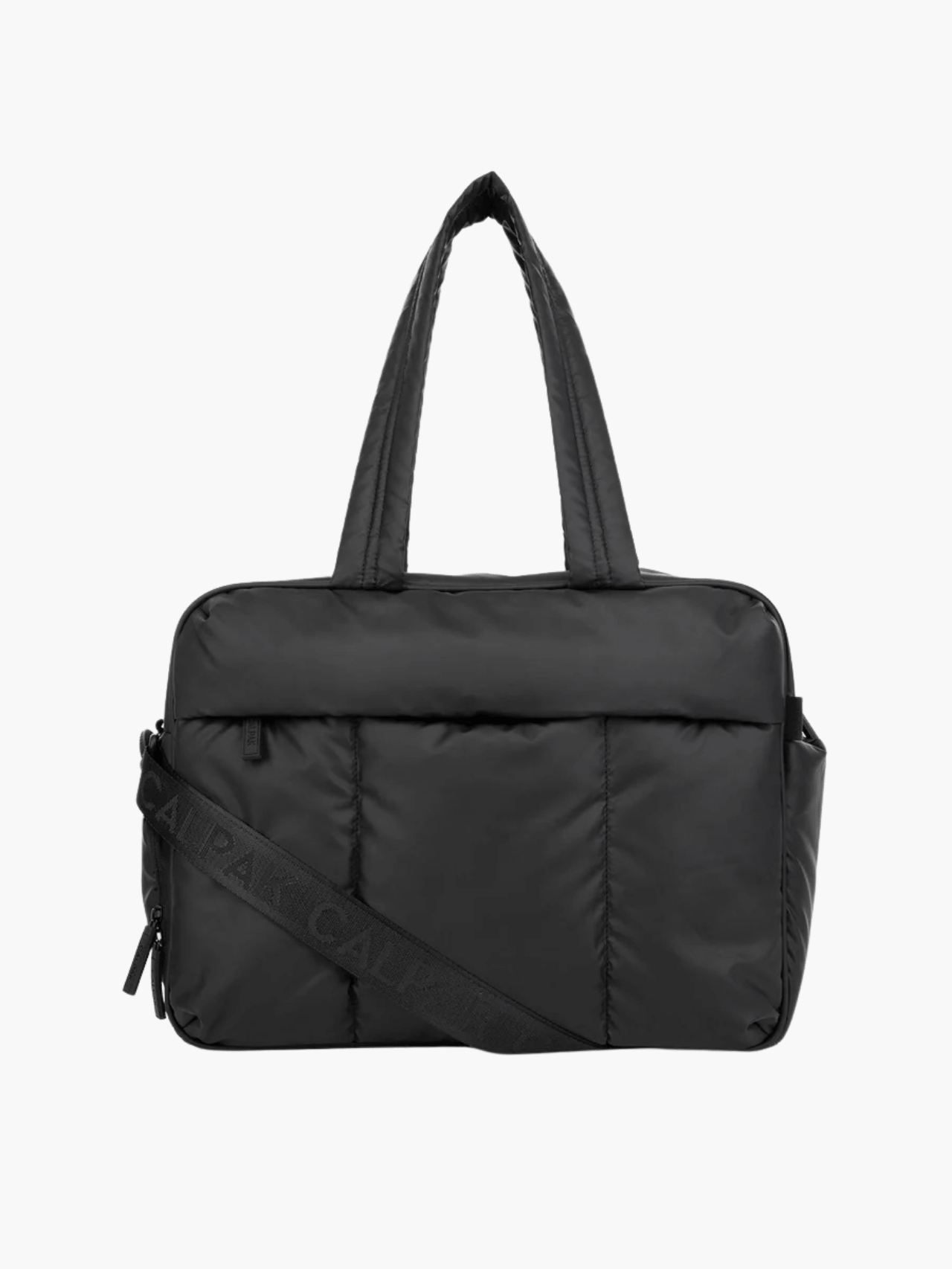
CAlpakIn addition to durable luggage, a reliable personal bag is incredibly practical for flights. It keeps everything you need within reach, from your book and headphones to your phone, passport, and snacks.
For a long time, I traveled with my Longchamp Le Pliage before finally switching to the Calpak Luka Duffel, which I’ve found far more practical for long days of travel. It’s very roomy too and has plenty of pockets to keep everything organized.
It also works perfectly as an overnight or weekend bag for short getaways during your Europe trip when you can leave your larger suitcase behind.
One of my biggest concerns with personal items is making sure they actually fit under the seat. Personal item size allowances vary by airline, especially in Europe, but the Luka Duffel is specifically designed to store under the seat! It’s also quite soft and flexible, so it’s much easier to stay within size limits while still packing everything you need.
I’ve gushed about this bag enough, but another feature I love is the trolley pass-through sleeve, which slides over your suitcase handle. It’s really the small details like these that make a big difference in traveling comfortably.
3. Packing Cubes
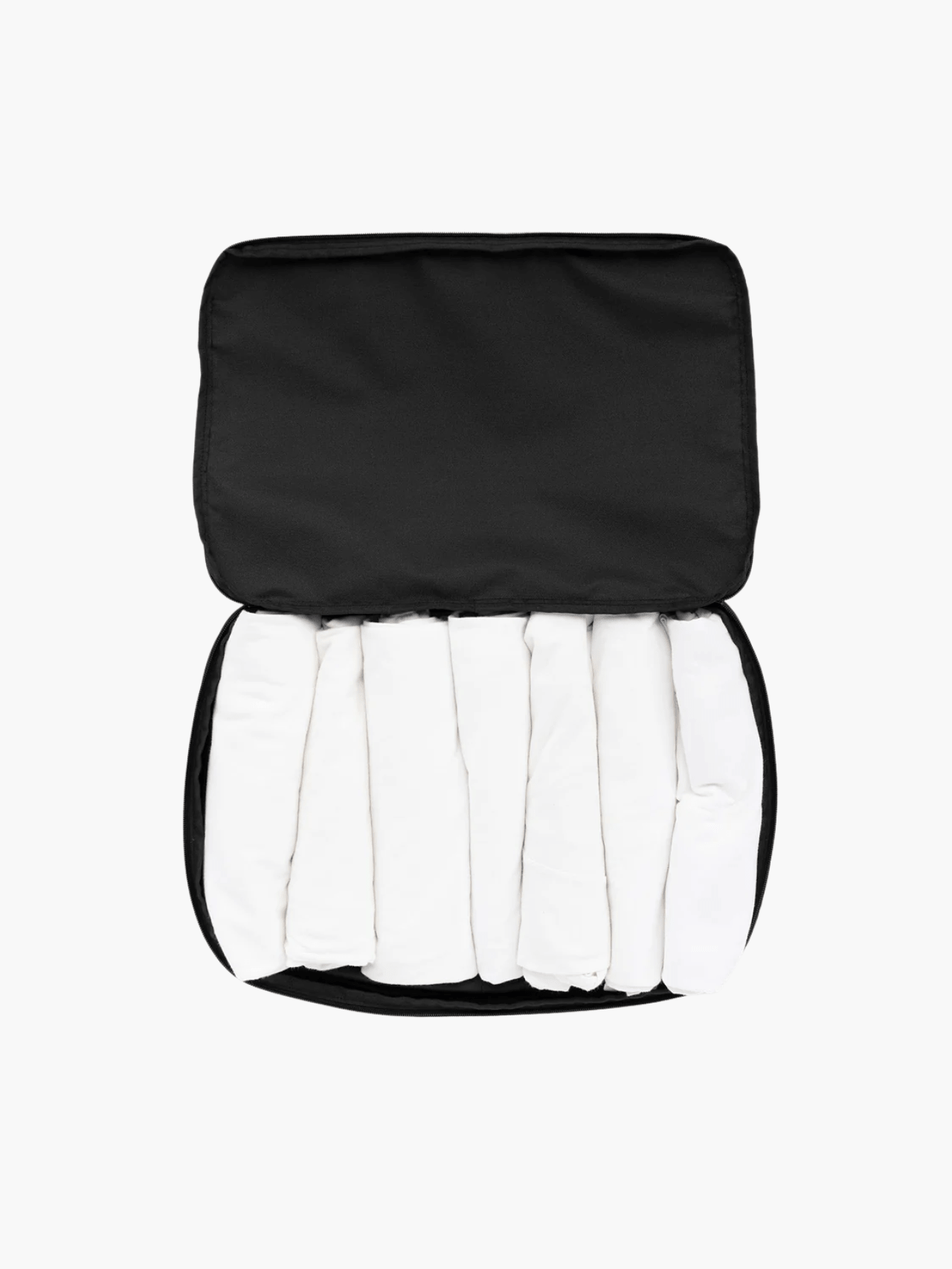
I’ve been traveling in Europe for almost 7 years now, and somehow I only recently came to understand the power of packing cubes. For the longest time, I thought they were just another way to stay organized (something I could already manage with any old bags and boxes).
Well, that changed the moment I tried packing cubes for myself. After receiving the Calpak set for Christmas, I immediately put them to the test on my flight from the U.S. to France. Not only did they keep everything neatly organized, they actually compressed my clothes so I had so much extra room!
These are especially helpful in Europe, where it’s common to move between hotels and Airbnbs during a single trip. If you don’t plan to unpack everything into drawers or closets, they make it easy to live straight out of your suitcase.
4. Walking Shoes
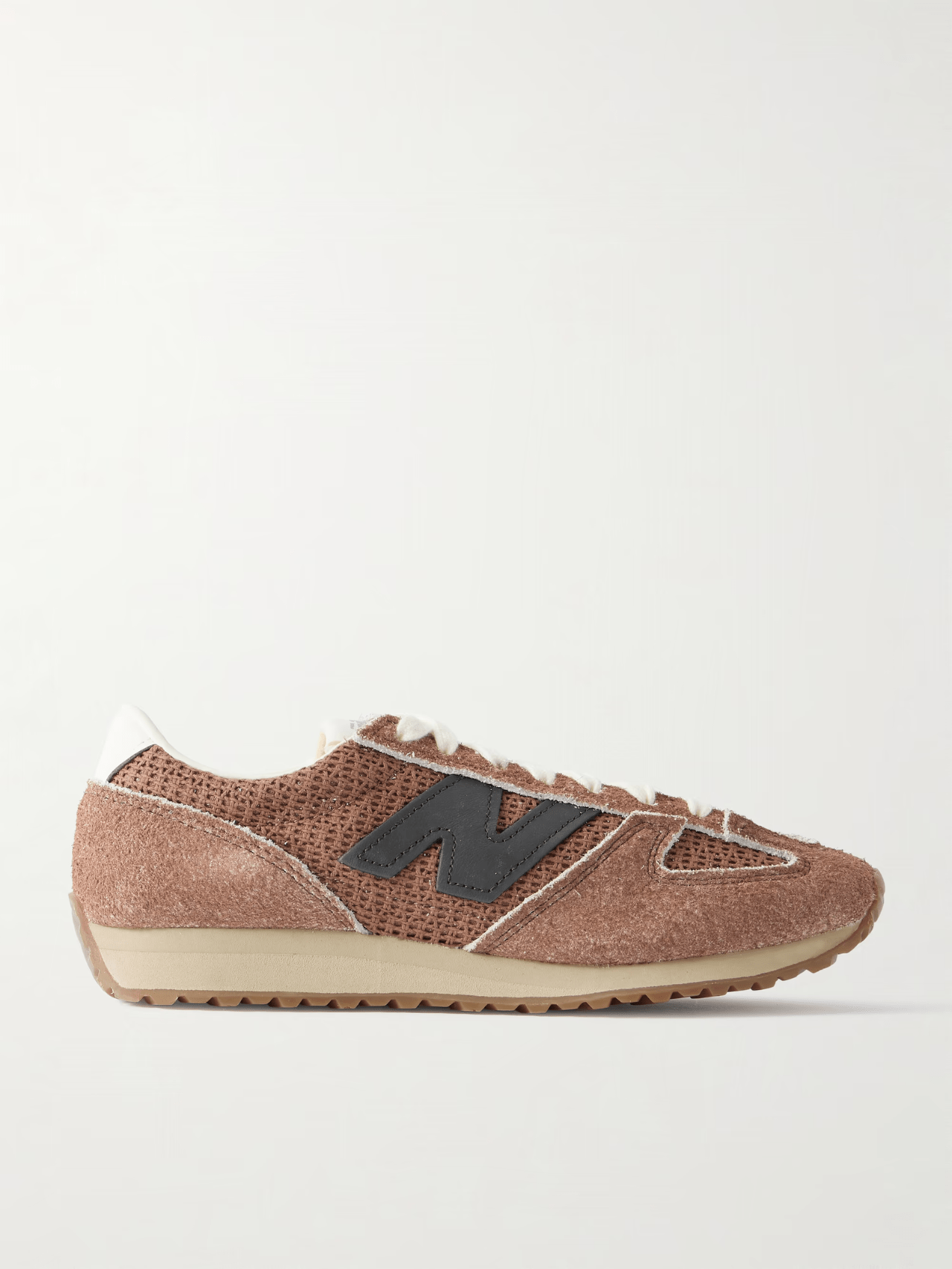
New BalanceFrom the streets of Rome to the canals of Amsterdam, European cities require a lot of walking. Expect to log miles each day, often on uneven cobblestone streets, stairs, and sidewalks.
That’s why a truly comfortable pair of walking shoes is non-negotiable. While heels may look cute (and I always pack a pair for evenings out), they’re not practical for day-to-day sightseeing.
I’ve tested more sneaker brands than I can count in search of pairs that don’t cause blisters, strain my feet, or simply fall apart halfway through a trip.
In my experience, a basic white sneaker is the most versatile because it works with almost any everyday outfit. I’ve personally worn my white Veja Campo sneakers on many Euro trips, including the two months I spent living in Paris.
That said, trendier styles are everywhere in Europe, even in fashion-forward capitals like Paris and Milan. It’s the slim, low-top silhouettes that will continue to dominate for summer 2026. Styles like the Puma Speedcat, Vans, and Adidas Tokyo are predicted to be especially popular. Anything from Nike and New Balance is also worth considering for stylish walking shoes.
Comfort should always come first, though. If you need more support, look into performance-forward options like On Cloud or Salomon, which are designed for long days on your feet. Even though you’ll often hear that athleisure and clunky athletic shoes are a big no-no in Europe, it really comes down to how you style them.
Shop Europe Walking Shoes
5. Lightweight Jacket or Coat
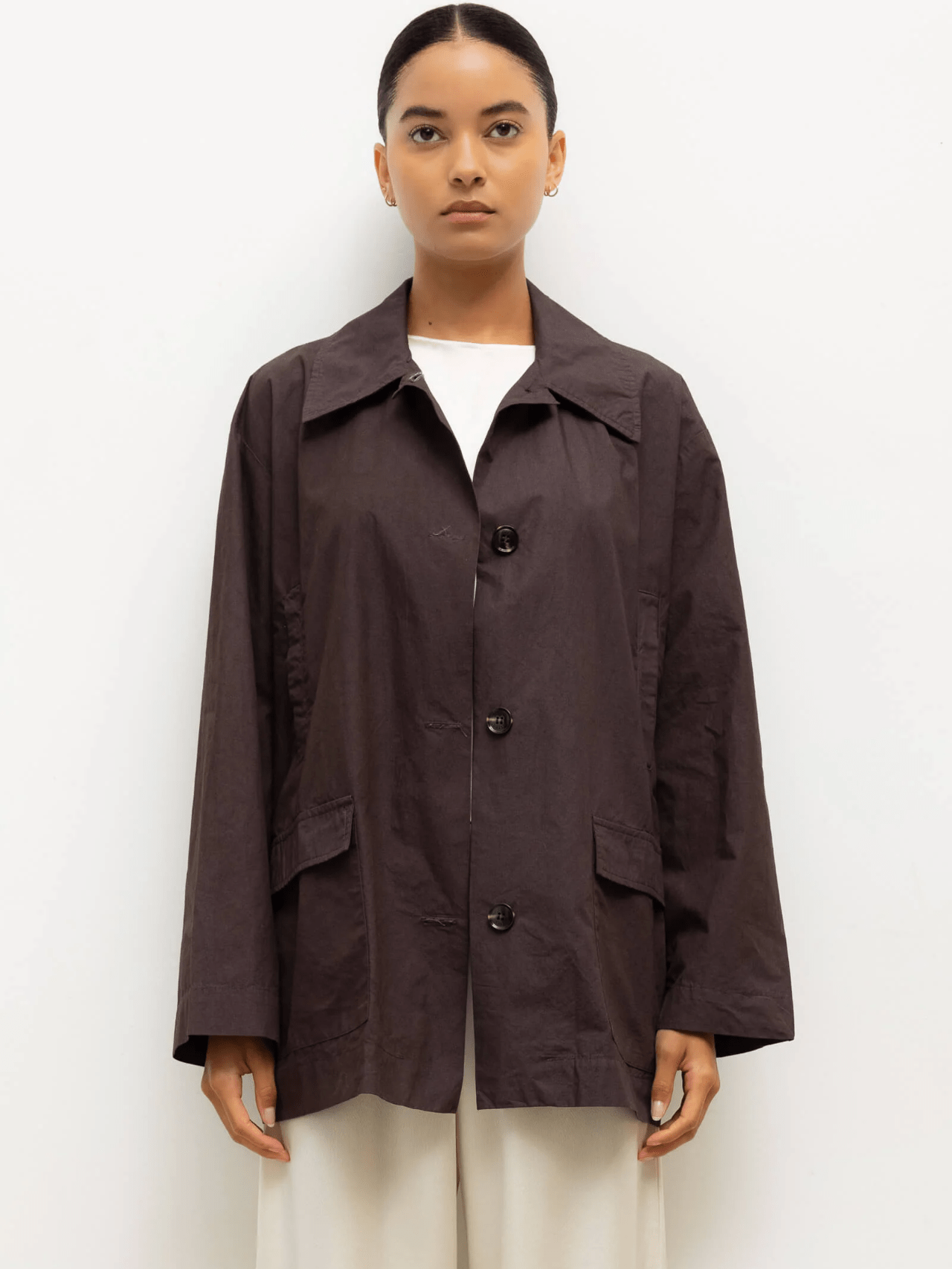
If there’s one thing you can count on while traveling in Europe, it’s unpredictable temperatures. Even in the summer, cities like Athens and Madrid can be hot during the day, only for evenings to cool off the second the sun sets.
Of course, you’ll want something heavier if you’re heading somewhere truly frigid, but from spring to fall, I never travel to Europe without one or two packable layers in my suitcase.
What you bring will depend on where and when you’re going, but you really can’t go wrong with a trench coat, leather jacket, blazer, denim jacket, or cardigan. These styles work in just about any destination.
As far as colors and fabrics go, I always prioritize neutrals for the most versatility. Wrinkle-resistant pieces are also better, but I honestly won’t pass on my favorite linen and cotton layers if I’m packing my travel steamer or know my hotel has an iron.
If you’re not sure what outerwear makes the most sense for your trip, I have plenty of travel capsule wardrobes to browse that break down exactly what to pack and how to style your jackets for Europe.
Shop Jackets for Europe
6. Scarf Wrap
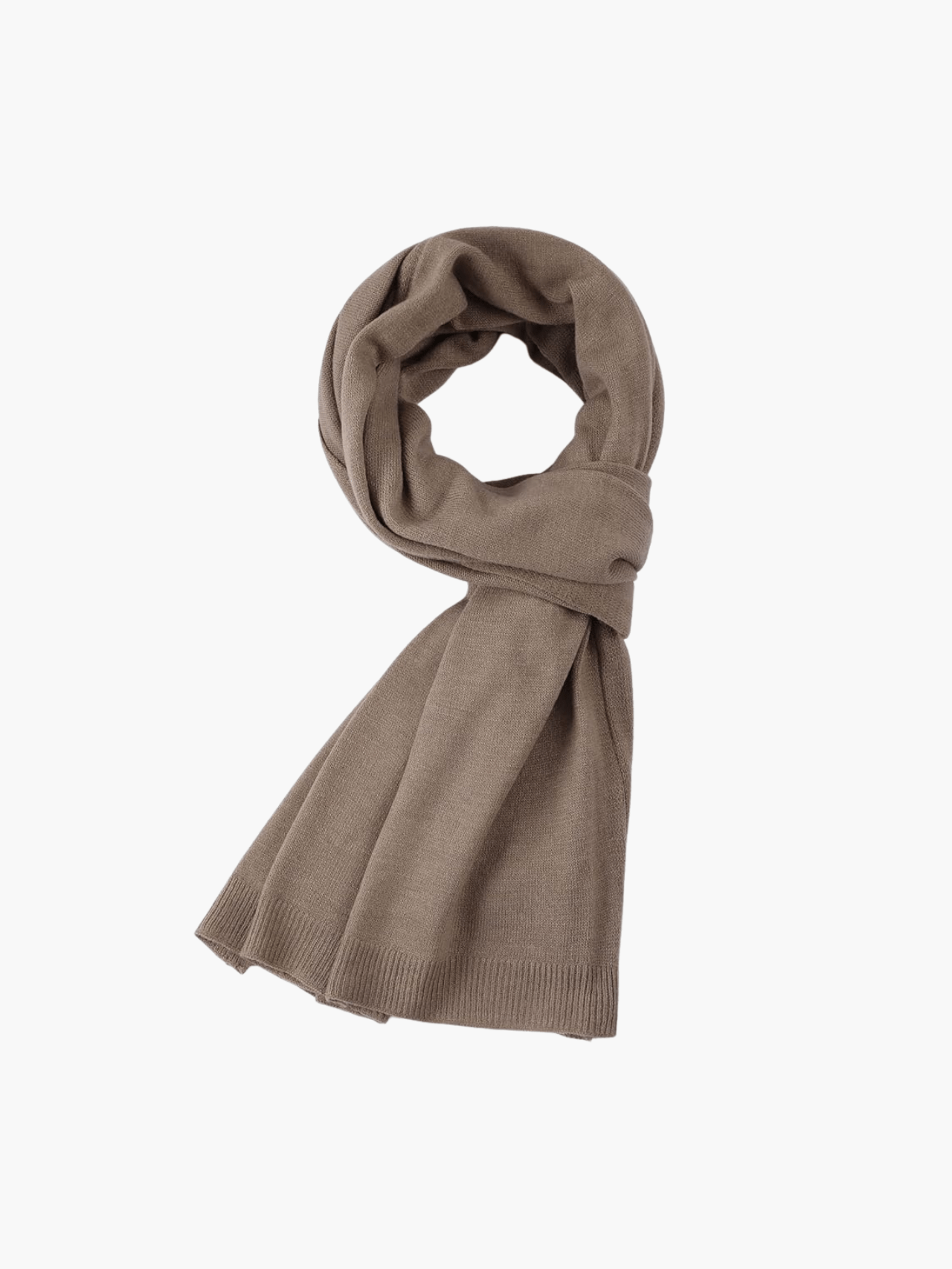
FomolomYou could technically group this under the lightweight layers that I just mentioned, but the scarf wrap deserves its own moment. It’s such a versatile piece, and as you know, versatility is incredibly important if you want to pack light for Europe.
Wear it as a traditional scarf during the day, then wrap it around your shoulders like a blanket on long flights or train rides. In the evenings, it doubles beautifully as a shawl for dinners or nights out. It even comes in handy at religious sites, where covering your shoulders is often required.
I recently picked up this poncho shawl for about $20 on Amazon that I wore on a recent trip to Florida. I was probably a bit too overdressed, but it would look absolutely perfect in southern Italy or Greece this summer!
Read More: How to Look Chic While Traveling
7. Day Bag
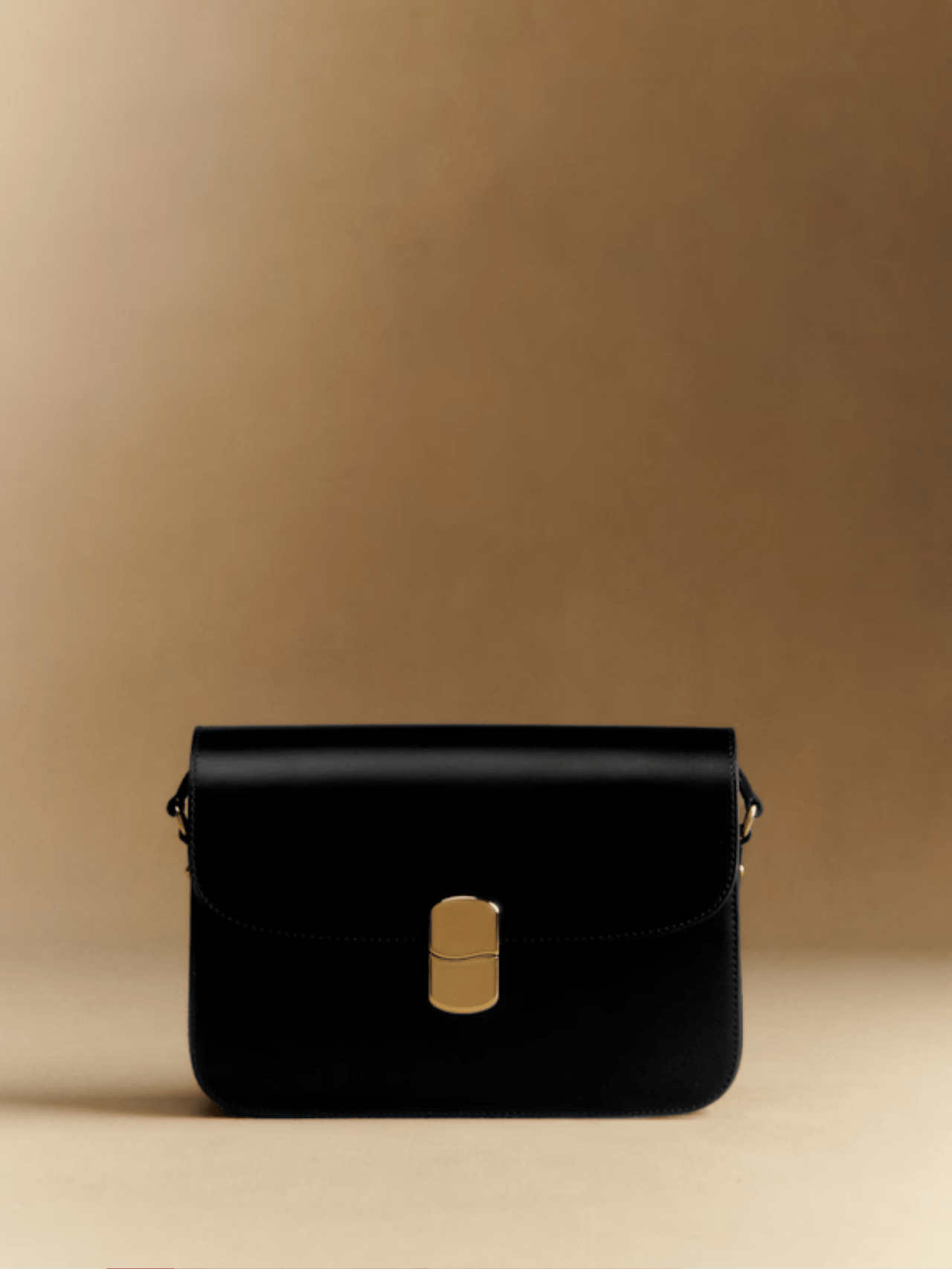
SézaneA secure and comfortable bag is a serious essential when you’re out and about all day. There are plenty of ultra practical options out there, but I try to find something that’s more on the stylish side (meaning it will look good in all of my vacation photos).
Crossbody bags and fanny packs are excellent if you’re after something hands-free. That said, I never recommend limiting yourself to just one style. Some days I love carrying a roomier tote bag. When you have an umbrella, water bottle, cameras, and souvenirs galore, it’s sometimes the way to go. Just make sure it fully closes and feels comfortable on your shoulder throughout the day.
You’ll hear a lot of warnings about pickpocketing in Europe, but staying aware of your surroundings and keeping your bag zipped goes a long way. The only bag style I tend to avoid is a backpack, which can make it easier for valuables to be accessed without you noticing.
When choosing your best day bag for Europe, also think ahead about what you’ll need to carry with you. I usually have my phone, keys, card holder, AirPods, and sunglasses. Test pack your bag before you leave so you make sure everything fits.
8. Adapters
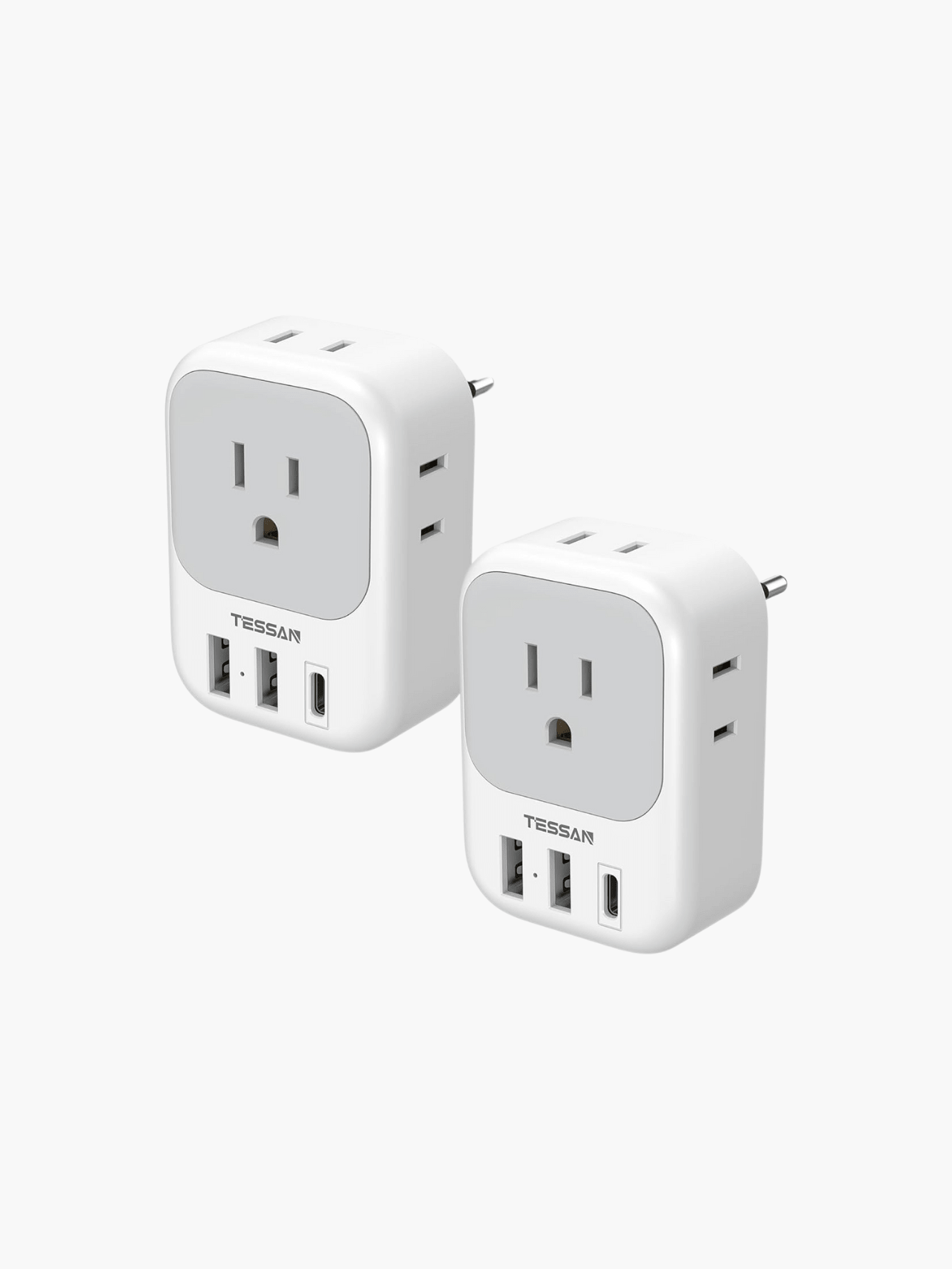
TessanEuropean outlets aren’t one-size-fits-all. Plug types and voltages vary from country to country, which is why a universal adapter is a must-have for keeping your devices charged throughout your trip.
I’ve used the TESSAN adapters since my first trip to Paris back in 2017. Above I’ve linked their best model, which lets you plug in multiple devices at once. One or two of these will cover your entire trip.
Now, let’s talk about converters. While adapters allow your plug to fit into European sockets, converters actually adjust the voltage. European outlets run at a higher voltage than in the U.S., and using certain devices without a converter can fry them.
Charging your phone and laptop usually isn’t a problem, but the voltage differences often become an issue with hair tools. I’ve personally had hairdryers and straighteners blow out because of faulty converters.
If you’re planning to pack hot tools for Europe, I’d skip the converters and see my suggestions below on how to style your hair safely.
9. Dual-Voltage Hair Tools
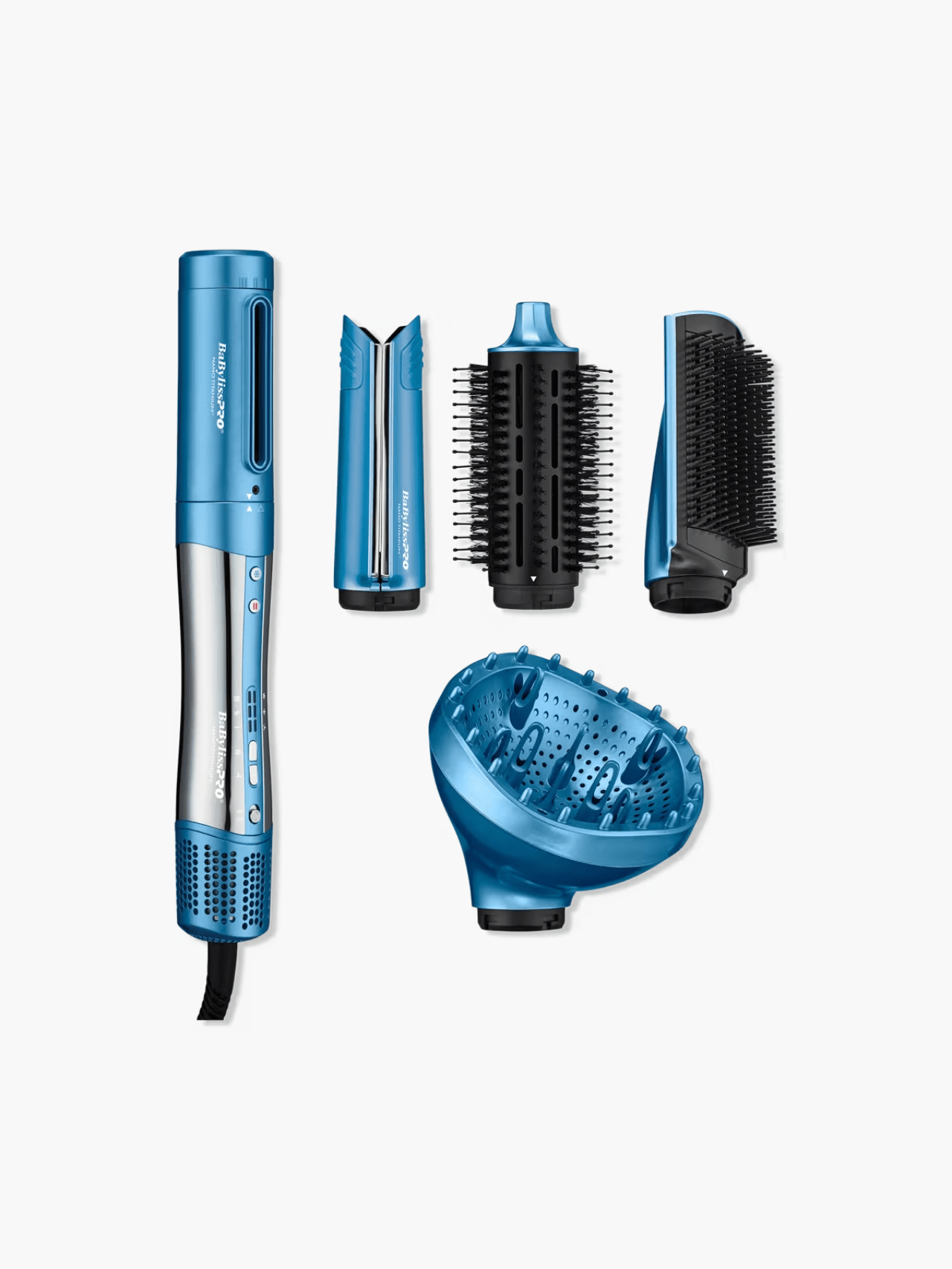
BaBylissPROSo voltage converters are a big no-go for Europe. So how do you use heat tools abroad without blowing them out?
Instead of bringing your U.S. tools (which aren’t designed to handle Europe’s higher voltage), invest in dual-voltage ones. They are actually made for different voltages, meaning you can use them in the U.S., Europe, and beyond! All you’ll need is a travel adapter so the plug fits European outlets.
My own hair routine is basically sacred at this point, so skipping hair styling while traveling was never an option for me. After ruining more tools than I care to admit (RIP my $200 CHI straightener), I finally did the research and found the best dual-voltage options, which I’ve linked below.
If you want even more recommendations and tips on how to safely use heat tools in Europe, I break it all down in this TikTok.
@lilychrie Your guide to using hair tools in France!! #france #hairtools #dysonairwrap #eurotrip #traveltips ♬ son original - Lily Chérie
Read More: How to Use Your Dyson Airwrap in Europe
10. Portable Charger
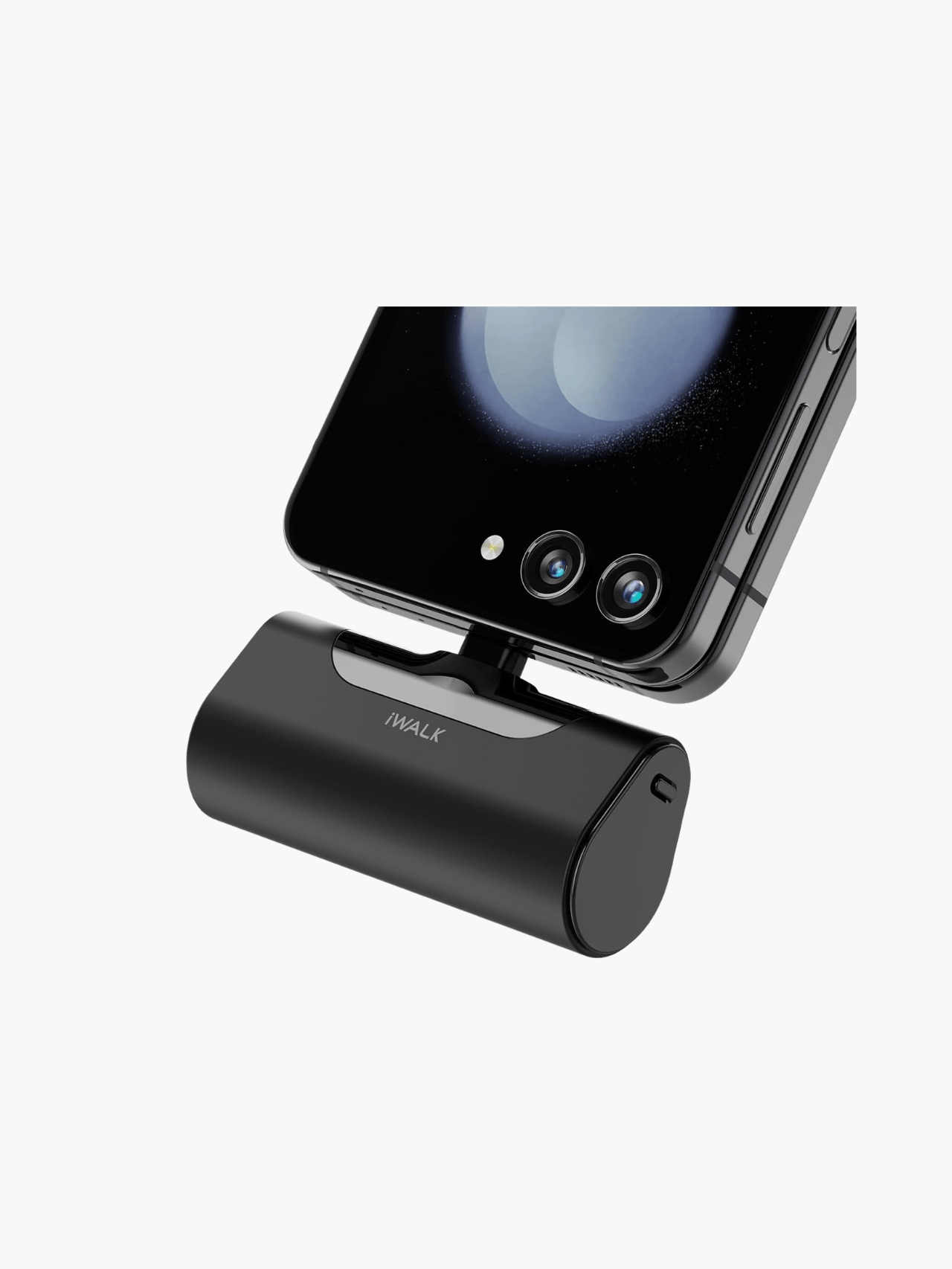
iWalkLong days of sightseeing, shopping and museum hopping can drain your phone fast. That’s why a compact power bank is easily one of my top essentials for a Europe trip. I swear I end up using mine every day when I’m travelling.
If you’re planning a solo trip, it’s especially important for staying safe. The last thing you want is to be lost in an unfamiliar city with a dead phone.
I’ve had a few different models over the years, but I’ve linked my current favorite above! The iWalk mini power bank is lightweight and fits easily in your pocket or purse. Plus, it eliminates the need to carry around a charging cord all day.
One thing I’ve learned from living abroad is that outlets can be scarce in Europe. If you’re staying in a hostel or traveling with others, a portable charger is a lifesaver when all of the outlets are occupied.
11. Travel-Friendly Toiletries
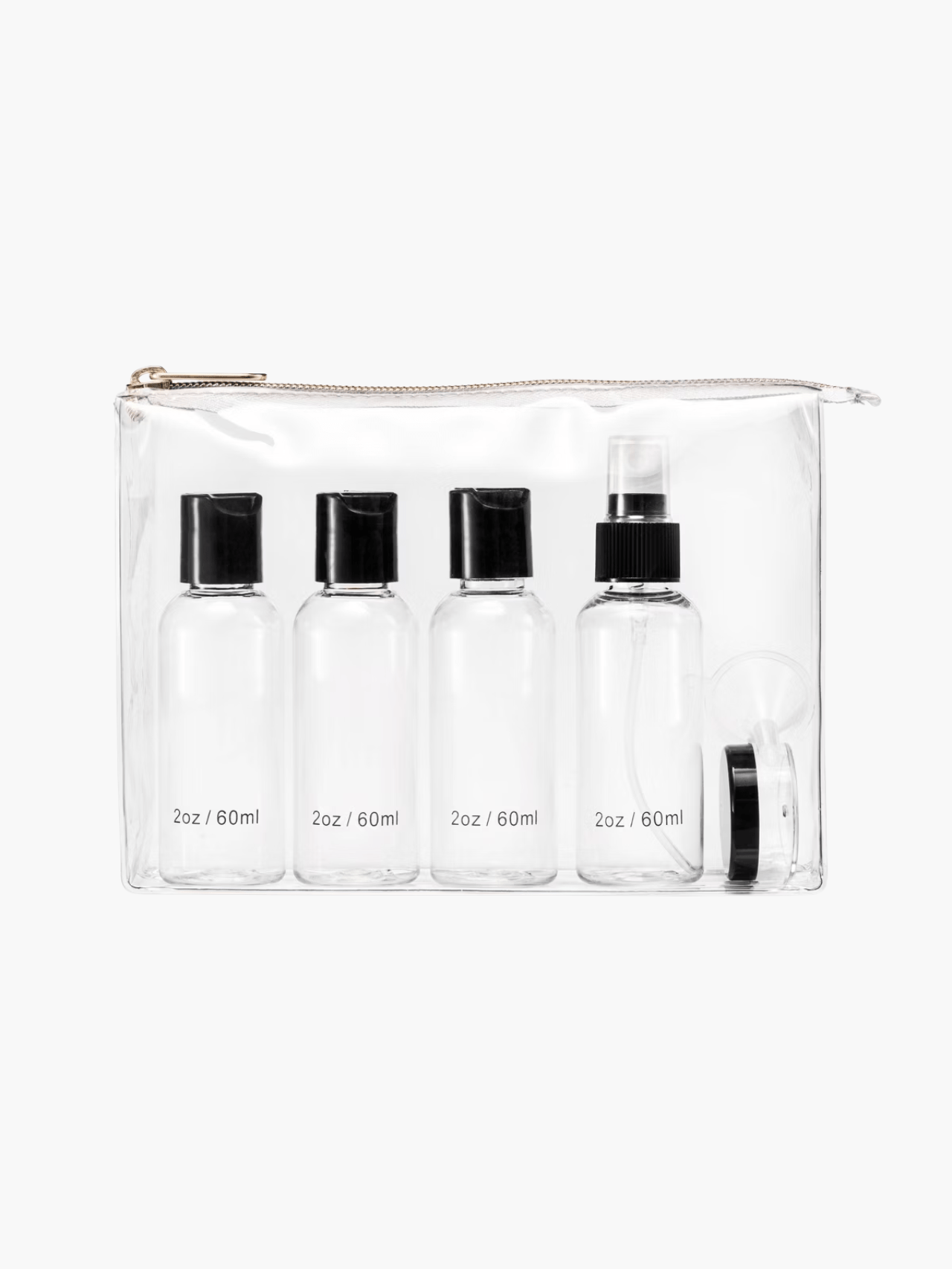
Sonia KashukI’ll admit it, I’m pretty high maintenance when it comes to my beauty routine. I hate leaving any step of my skincare behind, and I like having my favorite body, hair, and makeup products with me. The downside is that all of those creams, sprays, and potions add up fast and make your luggage heavy.
The key is travel sizes for everything. You can buy them directly from your favorite brands, or invest in refillable bottles that you can fill yourself. I also save random skincare and makeup samples I get throughout the year. Whenever I place an order from Sephora or Ulta, I always pick the freebies I know I’ll use later while traveling.
Remember, liquid restrictions apply for carry-on luggage too, so even if you pack light, you still might need travel-size bottles in order to skip checked luggage.
I also like to check what my hotel or Airbnb provides. Often you can skip packing body wash and lotion, and sometimes even shampoo and conditioner (especially at nicer properties) so you can save room and weight in your bag.
Read More: How to Create a Makeup Capsule Collection
12. AirPods

AirPods might seem like a “nice-to-have,” especially if you already have a bigger pair of headphones for the plane, but I actually use mine constantly while traveling in Europe.
The active noise cancellation makes them perfect on flights and trains, for taking calls, walking around the city, or even winding down at night with a meditation session (which I love, especially when jet-lagged). Many museums now have online audio guides, too, and AirPods make it really convenient to follow along (without disturbing anyone around you).
They’re also great for solo travel. I’ll often sit at a café listening to a podcast or pop them in on public transport (always staying aware of your surroundings, of course). And the best part is they take up almost no space in your bag.
13. Compact Umbrella
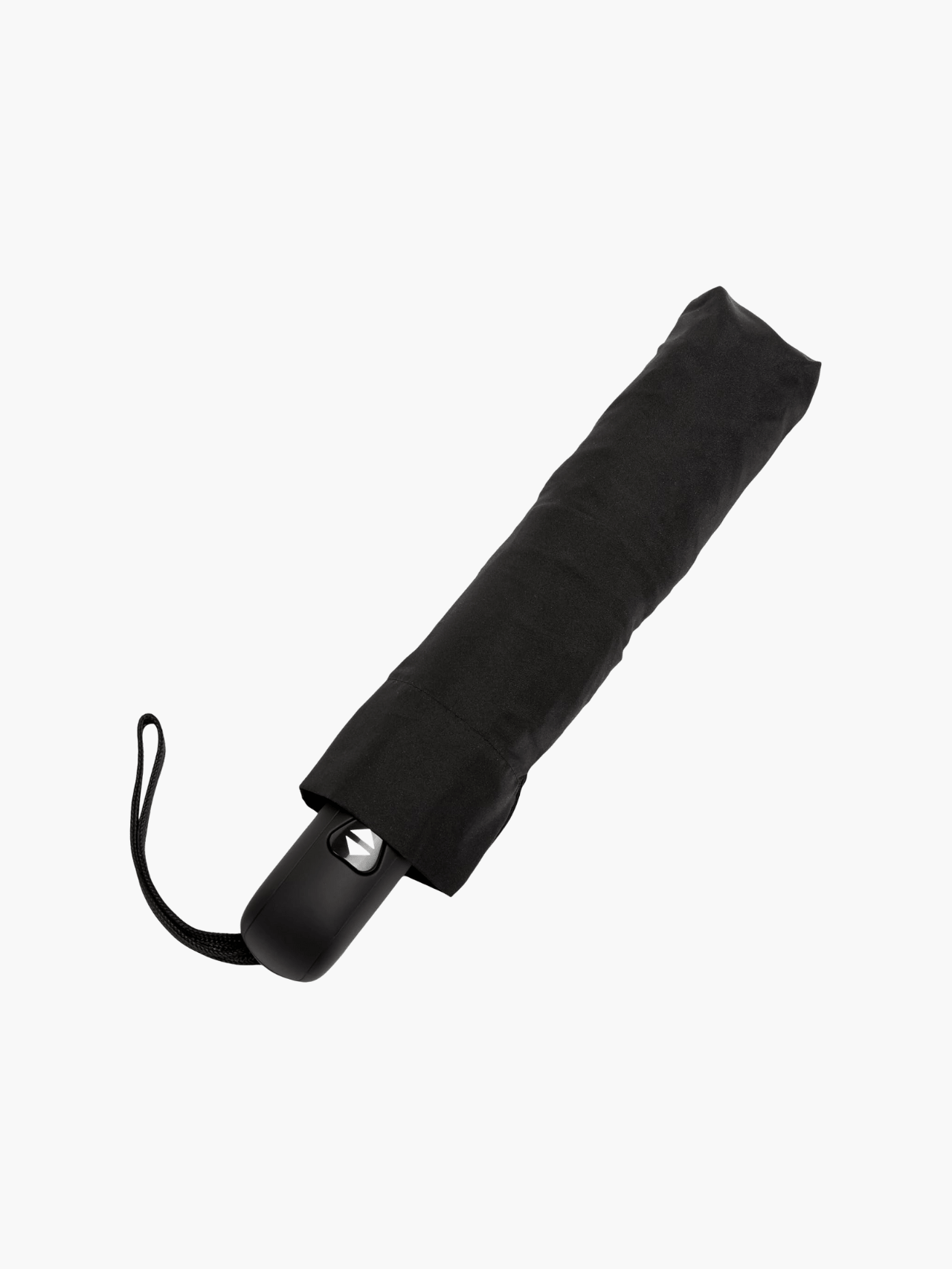
Amazon BasicsI almost always leave home with an umbrella, even when the forecast looks clear and sunny. European weather seems to have a way of changing in a flash.
I love this travel umbrella from Amazon. It’s small enough to fit in my purse, yet sturdy enough to handle surprise showers.
Depending on your destination, you might also want a packable rain jacket along with comfortable walking shoes that won’t get ruined in wet weather. This is especially vital in cities like London or Edinburgh where you can expect more drizzly days.
14. Sleep Mask
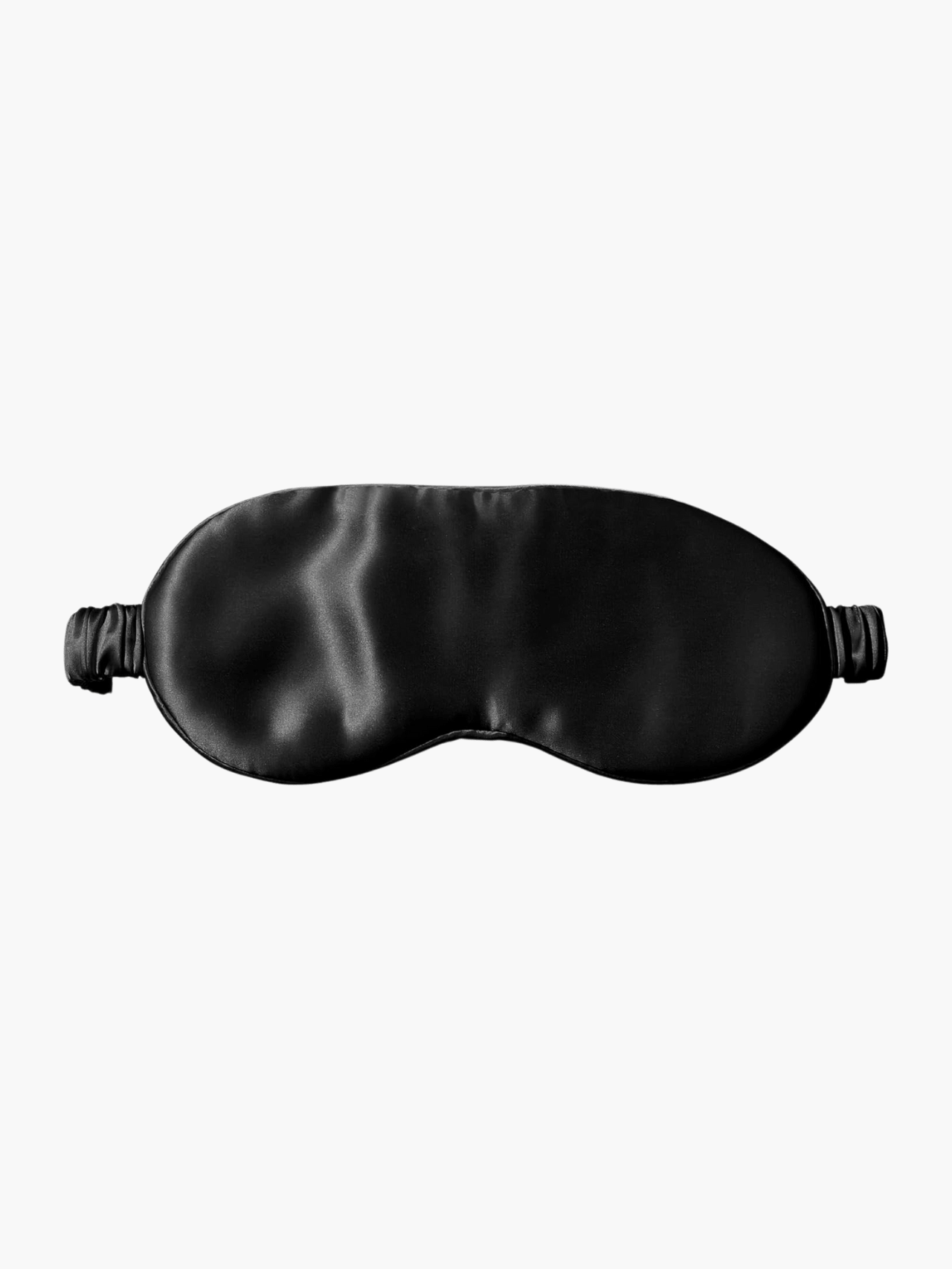
Sunday SilksIf you’re not already using a sleep mask, this might sound a little bougie, but trust me, it’s essential for getting quality sleep, especially during those first few nights while battling jet lag.
I’ve been using the Slip silk eye mask for almost five years, and I love it. The silk feels really gentle against your eyes, and it truly blocks out all light. I live in a European city myself, and I use it nightly to keep streetlights from disturbing my sleep. I also love this more affordable option under $40!
It’s also one of my favorite carry-on essentials for long-haul flights. With a good sleep mask, you can arrive in Europe well-rested and make the return trip just as comfortable.
15. Travel Documents
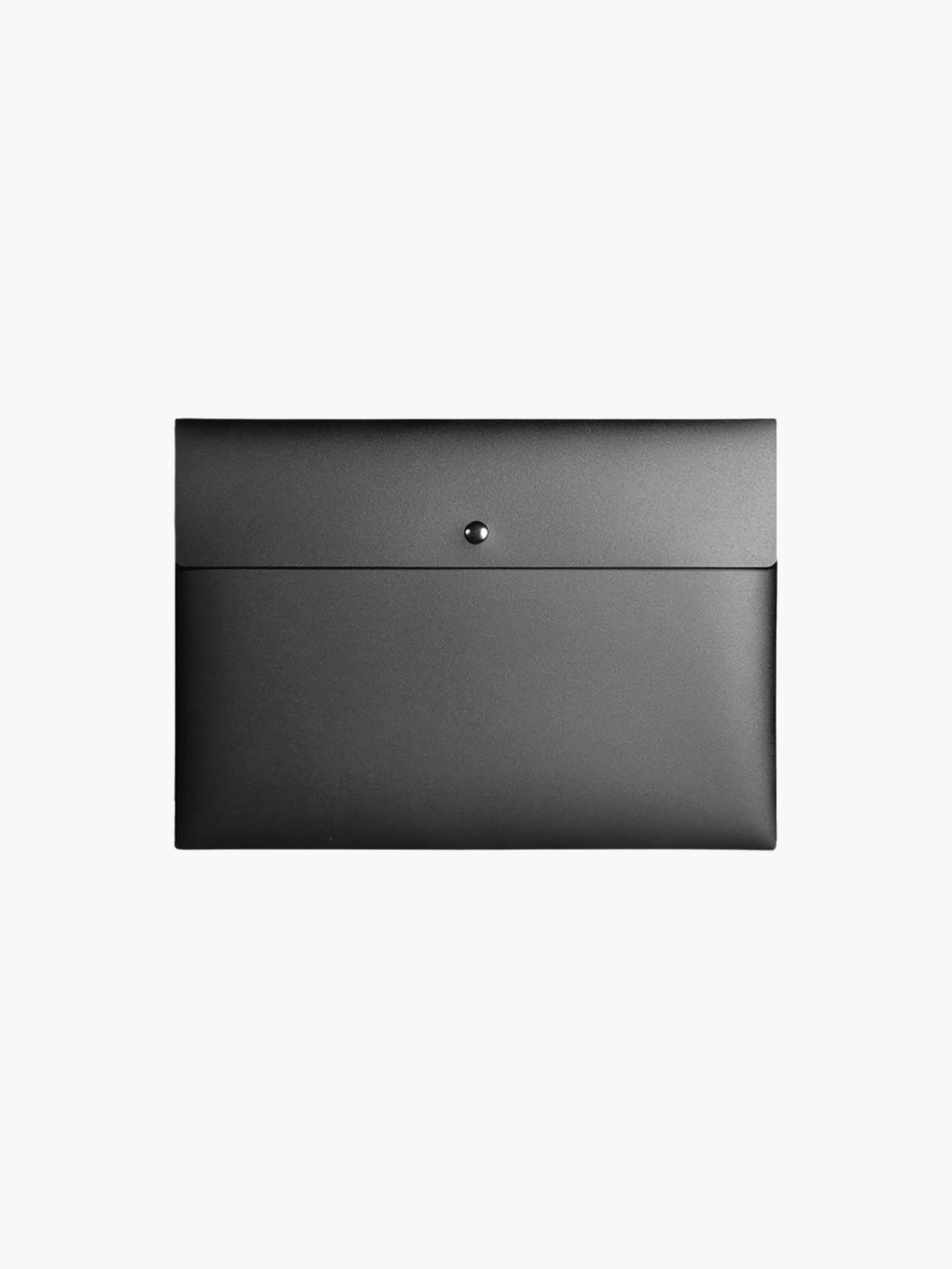
VanraPassport, visa, travel insurance, hotel confirmations—these are all non-negotiables when traveling in Europe. And always bring printed copies, too. Losing originals can turn into a major headache.
I recommend keeping everything in a lightweight document folder like this one. It keeps your papers organized and easy to access without turning your bag into a bulky mess.
Once you arrive at your destination, consider leaving your passport in the hotel safe if you don’t need it for day-to-day activities.
Shop europe travel essentials
More Travel Essentials for Europe
I like to be honest about what’s truly essential versus what’s just nice to have. When you’re new to traveling, it’s easy to think you need every gadget and gizmo out there, but if you rush to buy everything at once, you’ll end up spending a lot on items you might barely use.
Here are some extra and optional Europe essentials that you can slowly add to your packing list. If it’s your first trip to Europe or you don’t travel often, I wouldn’t rush to grab all of these right away:
Passport case. Keeps your passport protected and organized, but honestly, not necessary if you aren’t traveling multiple times a year.
Digital luggage scale. If you’re flying budget airlines or traveling for a long period, a digital luggage scale can be useful for avoiding overweight bags.
Dedicated travel laundry bag. Nice to have, but you can also get away with using a reusable shopping bag or packing cubes.
Tripod or selfie stick
Portable fan. A literal lifesaver for European summer sans AC.
Reusable water bottle. Or buy a plastic one when you arrive and refill it throughout your trip.
Reusable shopping bag. Most European grocery stores or drugstores either don’t provide bags or charge for them. Pack a small reusable bag to save a few euros or pick one up at your destination as a souvenir.
What are your must-have travel necessities for Europe? Let me know in the comments below.